
There are many joyful moments which one can experience while taking home a new cat, however, one should take into account that your new friend can be scared of the whole process of adaptation. Just imagine yourself being transferred to an unfamiliar place where you are surrounded by unknown scents, voices, and people. That is what your cat feels. Although you would like to hug and play with your new friend, your cat has to realize that he/she is in a safe place now.
That is when the 3-3-3 Rule for Cats becomes important for you because this rule is extremely useful when one wants to get through the first period of living together. No matter if you adopted a playful kitten or a cat, the 3-3-3 Rule for Cats will help you find out more information about what to expect in the first three days, weeks, and months of life together.
The 3-3-3 Rule for Cats is not a strict schedule because each cat is unique. Nevertheless, it is an interesting way to understand the emotional state of your cat.
Getting To Know About 3-3-3 Rule For Cats
3-3-3 rule for cats is a method that attempts to help the new cat owners understand how long it would take their cat to get adjusted to the new environment.
This process involves three steps, which include:
3 first days: The cat feels scared.
3 first weeks: The cat starts exploring the environment and bonding with you.
3 first months: The cat starts feeling comfortable.
It is like raising a plant. You cannot get flowers instantly. But if you give some water and sunlight to it, along with some patience, you will get flowers. It is the same way with the bond of a cat with you.
Why Do Cats Need an Adjustment Period by the 3-3-3 rule for cats?
3-3-3 Rule for cats shows that they are innocent creatures. They depend much on their sense of smell, routine, and environment. When you introduce them into a new place, you take away all that they know. Even if they were previously living in an animal shelter, breeder or other people’s home, now for them everything is new.
Some reasons why cats get stressed are:
- New smells
- Strange people
- New sounds
- New furniture
- Strange pets
- New feeding schedule
This is how stress occurs, and it is natural.
The First 3 Days
Your Cat Will Attempt To Hide Itself. Your cat will be trying to hide under the bed or closet during the first few days. This does not necessarily mean that your cat dislikes you. It is only an attempt to see whether your cat feels secure. It is Okay If Your Cat Eats in Small Amounts. Your cat may eat in very small amounts for the first two days. Only ensure that they drink water and get better.
Give your cat one quiet area which should contain the following things like, Food, Water, Litter tray, Soft bedding, Scratching post andToys. Do not play loud music and host parties and impose interaction.
Let Your Cat Come to You. Do not try to pick up your cat but just sit beside your cat. Speak in soft tones.

First 3 Weeks
Here is where the cat begins building confidence using the 3-3-3 Rule.
Exploration Time
Your cat will start exploring the house and poking around everywhere in there. A great sign indeed!
Routine Learning Time
Felines are very fast learners and they will soon figure out:
- Feeding time
- Sleeping time
- Members of the family
- Their favorite sunny spot
- Consistency makes them feel secure.
Cat’s Personality Appears
By now you should be able to tell whether the cat is:
- Playful
- Curious
- Affectionate
- Independent
- Talkative
Lots of people describe how after 2-3 weeks their cat turns into a completely different animal.
The First 3 Months
After several months, most cats truly feel at home.
Trust Develops
Your cat may:
- Sleep beside you
- Rub against your legs
- Follow you around
- Sit on your lap
- Greet you at the door
These behaviors show they now see you as family.
Comfort With the Environment
By now your cat understands:
- Safe hiding places
- Feeding schedule
- Family routine
- House rules
The home finally feels familiar.
Getting Ready for Your Cat’s Arrival at Your Home
Preparation is key, it makes a huge difference. Set up a “safe room” for your cat that includes these things, first is a Comfortable sleeping place, Food, Water, Litter box, Scratch post, Hideaway and Remove any potential dangers. Safety always comes first so remove these:
- Electrical cords
- Dangerous plants
- Cleaning supplies
- Small objects
- Open windows
Bring something like toys or anything else from her previous place, just to make her stress free because familiar smells reduce anxiety. If this is possible then just do it for your feline friend.
Common Behavior Patterns During Adjusting
Each cat adjusts in its own way. Here are some behavior patterns that your feline friend does like, Hiding is absolutely natural. The second one is Increased Meowing. Cats can meow more often because of their confusion. Third is Increased Sleepiness (More sleep is needed by cats to feel better emotionally), and decreased appetite is very typical for some time. Keep an eye on it and call a vet in case your cat does not eat at all for a long time. Using the litter box properly, the majority of cats get used to using the litter box fast if it is clean and quiet enough.
Mistakes to Avoid By 3-3-3 Rule For Cats
Owners with good intentions make these mistakes too.
Forced Affection
is one of the biggest mistakes that most owners make. Don’t drag your cat from a hiding spot. Remember trust can’t be rushed. It takes time.
Changing your cat’s diet
is the second mistake according to the 3-3-3 Rule For Cats. Rapid changes in diet could make your cat sick. Make it gradual.
Too Many Guests/ Visitors
are the cause of her nervousness. She gets easily nervous and scared by this move. Introduce her slowly to the visitors. Cats are not being bad on purpose. They are afraid, not defiant. So please respond with patience instead of punishment.
How to help Shy and Anxious Cats
There are some cats that need more encouragement.
Whispering/ Softly Speaking
Your voice can turn into one of comfort.
Giving Rewards
Good experiences help in building trust.
Playing
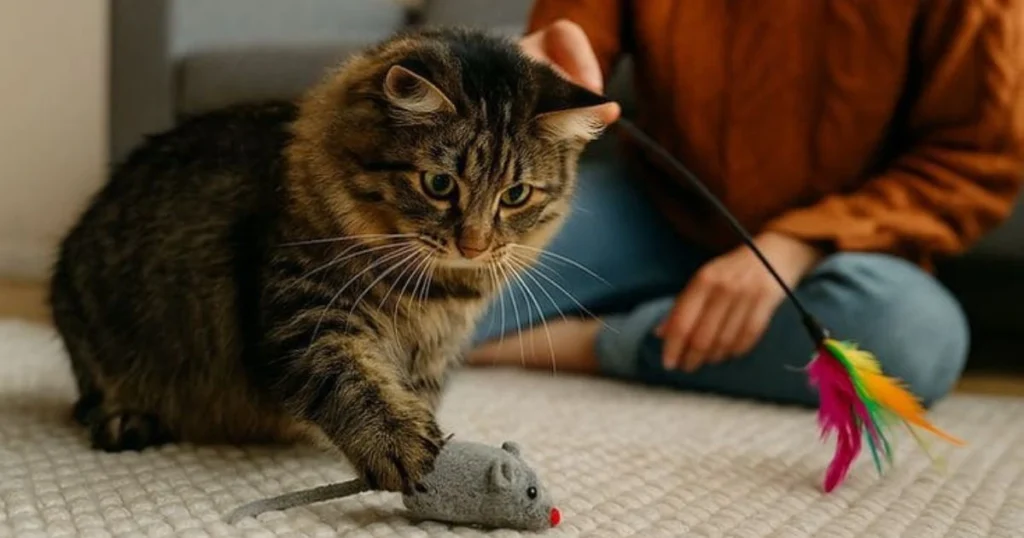
Feather wand or mouse toys can be used. This gives them confidence while alleviating stress. You should respect her personal space, because sometimes giving them some space helps us in building and gaining their trust.
Signs Your Cat Feels Safe
Wondering if the 3-3-3 Rule for Cats is working? Look for these signs:
- Purring
- Slow blinking
- Kneading blankets
- Grooming themselves
- Eating normally
- Exploring confidently
- Playing with toys
- Sleeping openly
- Greeting family members
These behaviors indicate growing confidence and happiness.
Conclusion
“3-3-3” rule for cats is an excellent instrument which will help you to get used to your new adopted cat. Not only does the rule disprove the myth about the fact that you need to connect with your cat at once, but also it claims that it takes time for building the friendship and developing the trustful relationship.
While some cats will easily adjust to new circumstances within several weeks, there are those who will need more time. What is essential, however, is to provide a calm atmosphere for your pet, establish a routine and let the cat develop independently. Soon enough you will have a friendly and confident cat that will be a member of your family.
FAQ’S
1. What is the 3-3-3 rule for cats?
This rule holds that it takes cats approximately three days to become accustomed to their surroundings, three weeks to adjust to their schedule, and three months to get acclimated to their new environment.
2. Do all cats follow the 3-3-3 Rule for Cats?
No. Every cat is unique. Some adapt more quickly, while shy or rescued cats may need additional time before they feel completely secure.
3. Should I allow my new cat to hide?
Yes. It is a natural behavior that helps the cat cope with the environment. Allow your cat some place where it can hide from others.
4. When should I worry if my new cat isn’t adjusting?
If your cat refuses food or water for an extended period, shows signs of illness, or remains extremely fearful without improvement after several weeks, consult a veterinarian or a qualified feline behavior specialist for guidance.