
Cat grooming is one of the most important parts of responsible pet care, yet many cat owners assume their cats can handle it all on their own. While cats are naturally clean animals that spend hours each day licking themselves, regular cat grooming at home still plays a huge role in preventing hairballs, matted fur, skin infections, and excess shedding. In this guide, you will learn everything about cat grooming from brushing and bathing to nail trimming and ear cleaning — explained in simple, easy-to-understand language so you can keep your feline friend looking and feeling its best.
Whether you have a short-haired cat that only needs occasional brushing or a long-haired breed like a Persian or Maine Coon that requires daily attention, this article covers practical, vet-informed tips for every cat owner. We’ll also answer the most common questions people ask about cat grooming, so you get a complete, trustworthy resource in one place.
Why Cat Grooming Matters
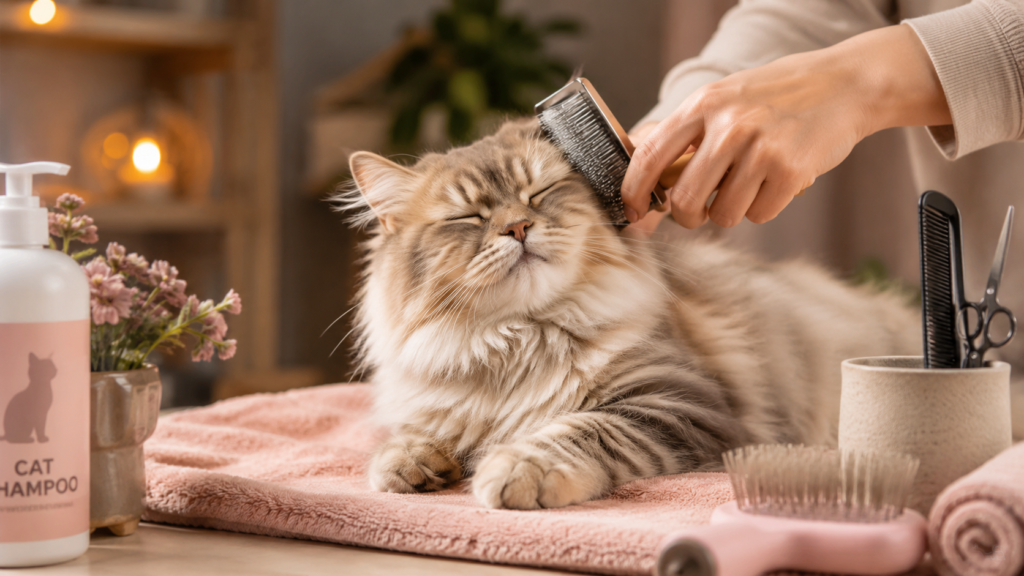
Cats are famous for being self-sufficient groomers, but their natural grooming habits don’t cover everything. Here’s why brushing your cat and maintaining a grooming routine still matters:
- Reduces shedding and hairballs – Regular brushing removes loose fur before your cat swallows it during self-grooming.
- Prevents matting – Tangled fur can pull on the skin and cause pain, especially in long-haired cats.
- Improves skin and coat health – Grooming distributes natural oils and helps you spot fleas, ticks, or skin issues early.
- Strengthens the bond between you and your cat – Gentle grooming sessions build trust and reduce anxiety.
- Helps detect health problems early – Lumps, wounds, parasites, or weight changes are easier to notice during grooming.
Veterinarians and professional groomers agree that a consistent grooming routine is just as important as diet and exercise for a cat’s overall wellbeing.
How Often Should You Groom Your Cat?
The frequency of cat grooming depends on your cat’s coat type, age, and health condition.
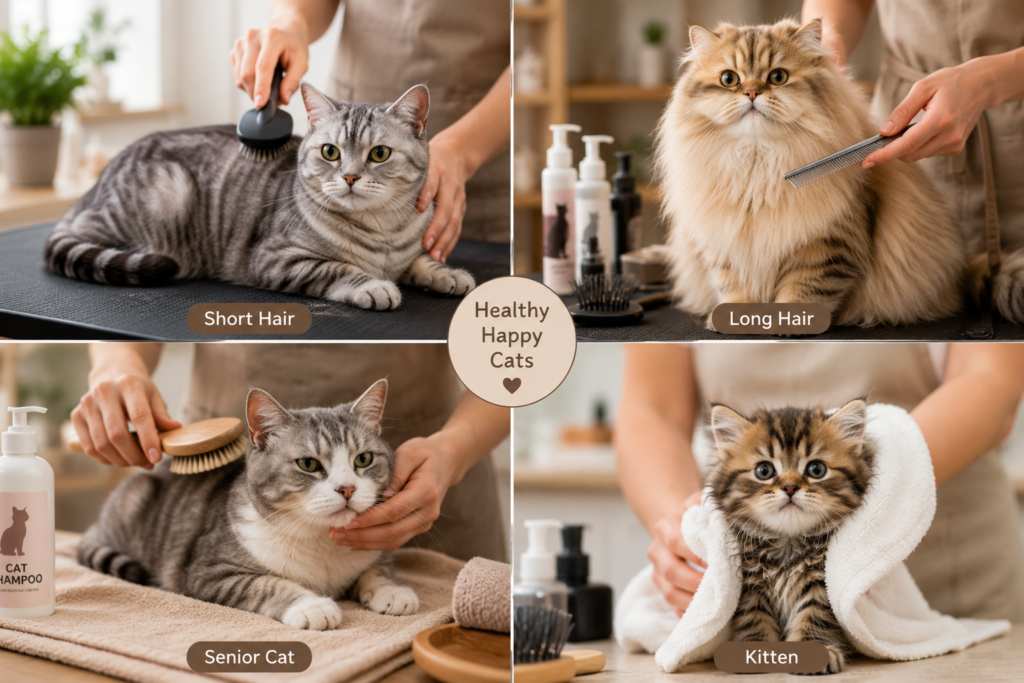
Short-Haired Cats
Short-haired breeds such as Domestic Shorthair, British Shorthair, and Siamese usually need brushing once or twice a week. Their coats shed less and rarely tangle.
Long-Haired Cats
Breeds like Persian, Maine Coon, and Ragdoll require daily brushing to prevent mats and tangles, especially around the belly, armpits, and behind the ears.
Senior Cats
Older cats often groom themselves less due to arthritis or reduced flexibility, so they may need more frequent brushing and gentle assistance from their owners.
Kittens
Kittens should be introduced to grooming early with short, gentle sessions to help them get comfortable with the process for life.
Essential Cat Grooming Tools
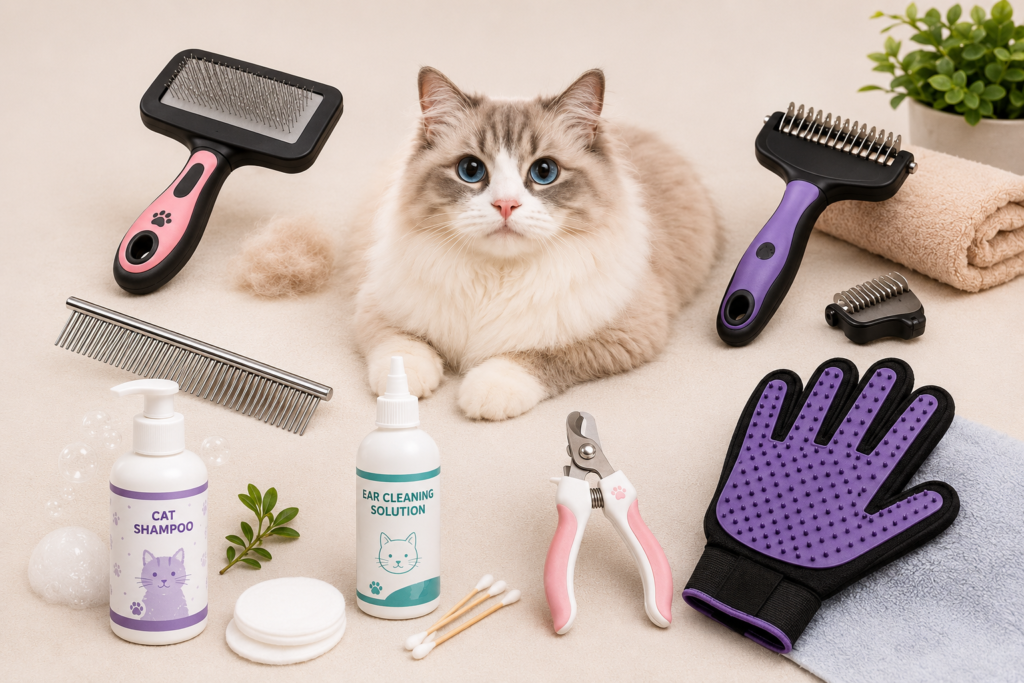
Having the right tools makes cat grooming safer, faster, and more comfortable for your cat. A basic cat grooming kit should include:
- Slicker brush – Removes loose fur and prevents matting.
- Deshedding tool (like an undercoat rake) – Reduces shedding, especially during seasonal coat changes.
- Metal comb – Helps detect and gently remove small tangles or debris.
- Cat-safe nail clippers – For safe, regular nail trimming.
- Cat shampoo – Formulated specifically for feline skin pH; never use human shampoo.
- Ear cleaning solution – Vet-approved solution for gentle ear hygiene.
- Grooming gloves – A gentle option for cats who dislike brushes.
Using the wrong tools, such as human hairbrushes or scissors, can hurt your cat or damage its coat, so always choose products designed specifically for feline grooming.
Step-by-Step Cat Grooming Routine
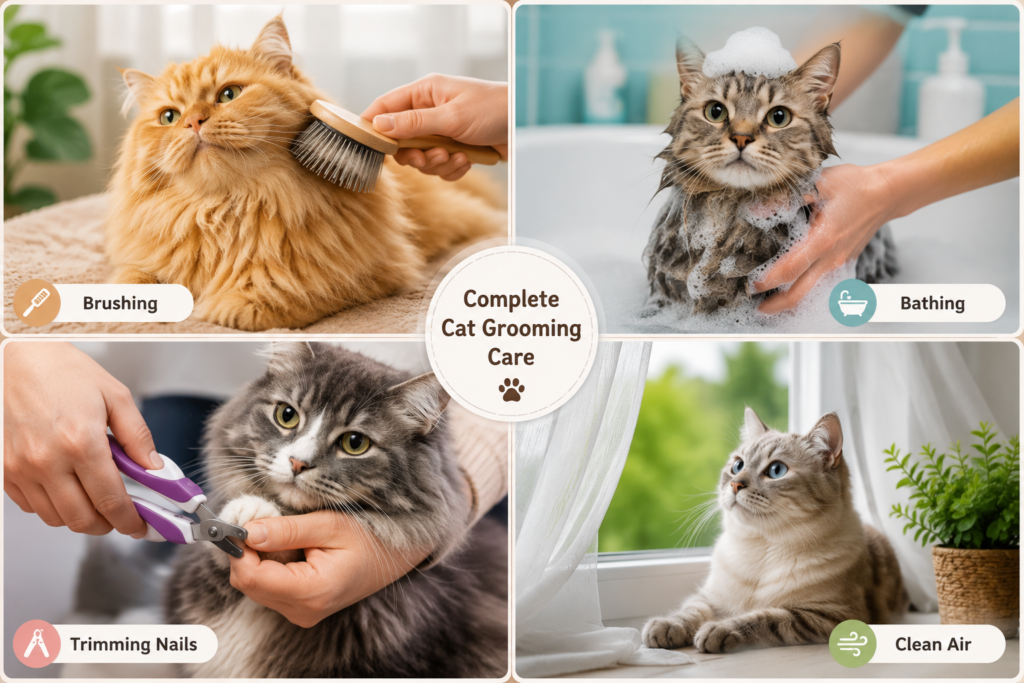
1. Brushing Your Cat’s Coat
Start by brushing in the direction of hair growth, using gentle strokes. Focus on areas prone to tangling, such as behind the ears, under the legs, and around the tail. For long-haired cats, work through small sections at a time to avoid pulling.
2. Bathing Your Cat (When Necessary)
Most cats don’t need frequent baths, but bathing may be necessary if your cat gets into something sticky, has a skin condition, or can’t groom itself due to obesity or illness. Use lukewarm water and cat-specific shampoo, and always dry your cat thoroughly afterward to prevent chills.
3. Trimming Nails
Trim only the sharp tip of the nail, avoiding the pink area (the quick), which contains blood vessels and nerves. If you’re unsure, ask your veterinarian to demonstrate the correct technique during a checkup.
4. Cleaning the Ears
Use a vet-approved ear-cleaning solution on a cotton pad, and gently wipe the visible part of the ear. Never insert cotton swabs deep into the ear canal, as this can cause injury.
5. Checking Teeth and Gums
Dental health is part of overall grooming. Brushing your cat’s teeth a few times a week with a cat-safe toothpaste can help prevent gum disease and bad breath.
6. Managing Hairballs
Regular brushing significantly reduces hairball formation. If your cat frequently vomits hairballs, consider a specialized hairball-control diet in consultation with your vet.
Signs Your Cat Needs Professional Grooming
While most cat grooming can be done at home, some situations call for a professional groomer:
- Severe matting that can’t be gently brushed out
- Cats that are extremely anxious or aggressive during grooming
- Long-haired breeds needing a full trim or “lion cut”
- Cats with mobility issues who can’t groom themselves properly
- Overweight cats unable to reach certain areas of their body
Professional groomers are trained to handle stressed or difficult cats safely, and they can also spot early signs of skin conditions or parasites that owners might miss.
Common Cat Grooming Mistakes to Avoid
- Using human shampoo or soap – This disrupts a cat’s skin pH and can cause irritation.
- Brushing too roughly or too fast – This can hurt sensitive skin and make your cat dislike grooming.
- Skipping nail trims – Overgrown nails can curl into the paw pad and cause pain or infection.
- Ignoring mats – Mats should never be cut with regular scissors close to the skin, as cat skin is thin and easily nicked.
- Forcing grooming when the cat is stressed – Always groom in short, calm sessions, especially with anxious cats.
How to Make Grooming Stress-Free for Your Cat
Many cats resist grooming simply because it’s unfamiliar or uncomfortable. Here are a few tips to make the experience more pleasant:
- Start grooming sessions when your cat is calm, such as after a meal or nap.
- Keep sessions short at first, gradually increasing the time as your cat gets comfortable.
- Use treats and praise to create a positive association.
- Choose a quiet, familiar space free from distractions.
- Watch your cat’s body language and stop if it shows signs of stress, such as flattened ears or a swishing tail.
Patience is key. Cats that are introduced to grooming gradually and positively are far more likely to tolerate — and even enjoy — the process over time.
Cat Grooming and Overall Health: What Experts Recommend
Veterinary professionals recommend treating grooming as part of a broader wellness routine, alongside proper nutrition, hydration, parasite prevention, and regular vet checkups. A well-groomed cat is easier to examine for lumps, wounds, weight changes, or parasites, making grooming an important tool for early detection of health issues. Many veterinary clinics also offer grooming guidance during routine wellness visits, so don’t hesitate to ask your vet for breed-specific advice.
Frequently Asked Questions About Cat Grooming
1. How often should I groom my cat? Short-haired cats need brushing once or twice a week, while long-haired cats often need daily brushing to prevent mats and tangles.
2. Do indoor cats need grooming? Yes. Even indoor cats shed, develop hairballs, and need nail trims and occasional coat care, regardless of their limited outdoor exposure.
3. Can I use baby shampoo on my cat? No. Baby shampoo is formulated for human skin pH and can dry out or irritate a cat’s skin. Always use a shampoo made specifically for cats.
4. Why does my cat hate being brushed? Cats may dislike brushing due to past discomfort, sensitive skin, or unfamiliarity. Gradual, gentle introduction with treats can help build tolerance.
5. How do I remove a mat from my cat’s fur without hurting it? Gently work through the mat with a metal comb, starting at the edges. For severe mats, it’s safer to have a professional groomer or vet remove them.
6. Is it normal for cats to groom themselves excessively? Occasional grooming is normal, but excessive licking or bald patches can indicate stress, allergies, or a skin condition and should be checked by a vet.
Final Thoughts on Cat Grooming
A consistent cat grooming routine keeps your cat’s coat healthy, reduces shedding and hairballs, and gives you the chance to catch potential health issues early. By using the right tools, following a gentle step-by-step approach, and knowing when to call in a professional groomer, you can make grooming a positive experience for both you and your cat. Start with small, calm sessions, stay consistent, and your cat’s coat — and overall health — will thank you for it.