
Do cats need baths? For most healthy cats, the honest answer is no cats are natural self-groomers and rarely require a full bath. However, there are specific situations (skin conditions, obesity, senior age, mess, or medical treatment) where bathing becomes necessary or even essential for your cat’s health. In this guide, we’ll break down exactly when a bath is needed, when it isn’t, and how to do it safely if the time comes.
Most cats do not need regular baths because they naturally keep themselves clean through daily grooming. However, a bath may be necessary if your cat gets covered in dirt, grease, toxic substances, or has a medical condition that requires special skin care. Proper grooming and occasional bathing when truly needed help keep your cat’s coat healthy and comfortable.
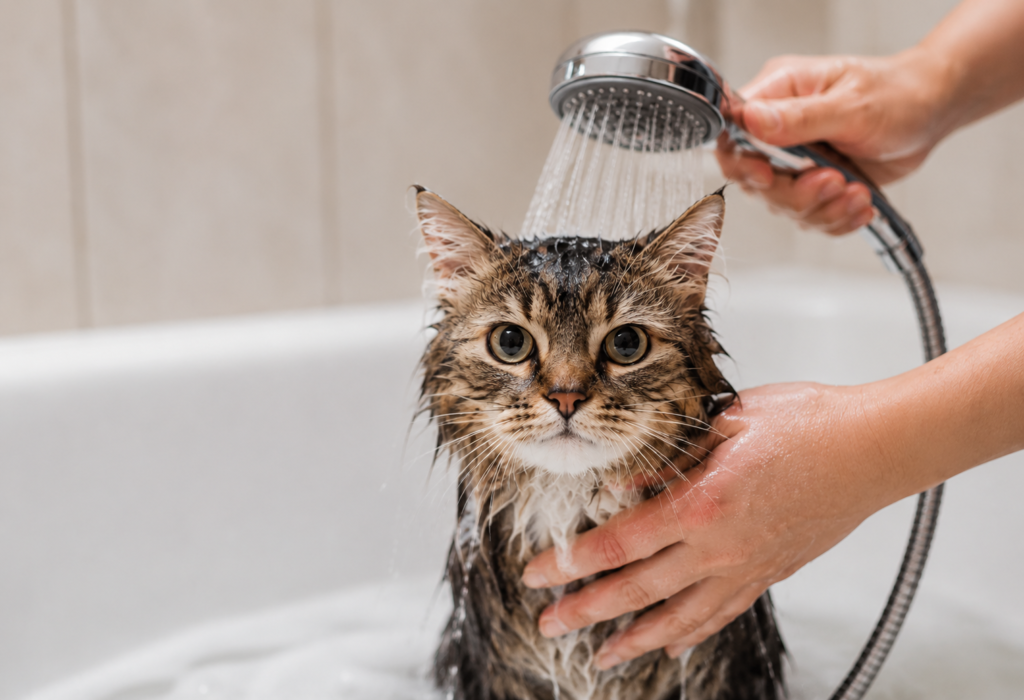
Why People Ask “Do Cats Need Baths?”
Yes , for cat grooming. Most new cat owners assume bathing is a routine part of pet care, the same way it is for dogs. But cats are biologically different. Their tongues are covered in tiny, hook shaped papillae that act like a built-in comb, and their saliva has natural cleaning and deodorizing properties. This is why you’ll often see a cat spend hours a day licking and grooming itself.
So while dogs typically need baths every few weeks, cats are largely self sufficient when it comes to hygiene. That said, “usually don’t need baths” is not the same as “never need baths.” Let’s look at both sides.
Do Cats Need Baths Normally? (Short Answer: Rarely)
Do cats need baths normally ? No, Under normal, healthy conditions, cats do not need regular baths because:
- Self-grooming instinct: Cats groom themselves multiple times a day, distributing natural oils evenly across their coat.
- Low body odor: Unlike dogs, healthy cats don’t develop a strong “doggy smell” that requires washing.
- Water aversion: Most cats find water stressful, and unnecessary bathing can cause anxiety, skin dryness, and trust issues between you and your pet.
- Self-regulating coat oils: Frequent bathing strips natural skin oils, which can lead to dry, flaky, or irritated skin.
For an average indoor cat with a healthy coat, brushing 1–2 times a week is usually enough to manage shedding, hairballs, and coat health — no water required.
When Cats DO Need a Bath ?
Even though bathing isn’t routine, there are clear situations where do cats need baths is necessary or recommended:
1. Visible Dirt, Grease, or Sticky Substances
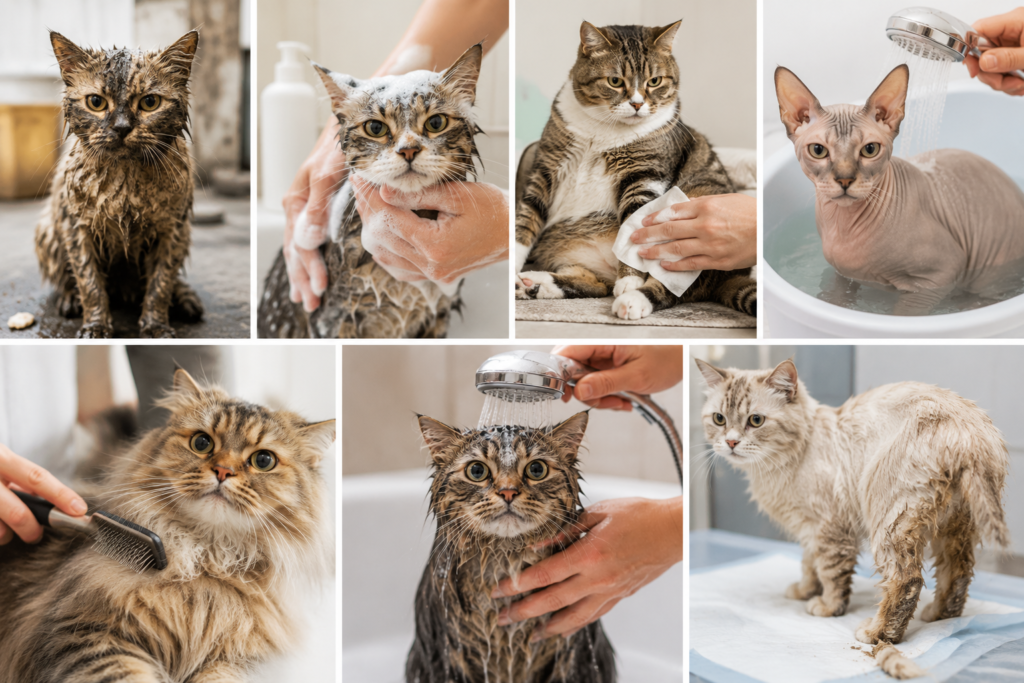
If your cat gets into something sticky, oily, or toxic (like paint, motor oil, or chemicals), grooming alone won’t remove it and licking it off could be dangerous. A bath is required immediately in these cases.
2. Skin Conditions or Flea Infestations
Cats with dermatitis, fungal infections (like ringworm), or flea infestations often need medicated baths as part of veterinary treatment. Your vet may prescribe a specific medicated shampoo.
3. Obesity or Mobility Issues
Overweight, arthritic, or senior cats often struggle to reach certain areas of their body, leading to matted fur or hygiene issues around the tail and hindquarters. These cats may need occasional help bathing.
4. Hairless or Low-Grooming Breeds
Breeds like the Sphynx don’t have fur to absorb their skin’s natural oils, so oil buildup occurs on the skin itself. These cats typically need a bath every 1–2 weeks.
5. Long-Haired Cats With Matting
Breeds like Persians and Maine Coons are prone to matting. In some cases, a bath (combined with brushing) helps loosen tangles before more severe matting requires shaving.
6. Excessive Shedding or Allergy Management
If a family member has cat allergies, regular (gentle) bathing can reduce allergen levels on the fur, though this should be balanced against the cat’s comfort.
7. Illness, Incontinence, or Diarrhea
Cats that are sick, elderly, or dealing with digestive issues may soil themselves and need cleaning that grooming can’t handle.
How Often Should You Bathe a Cat?
There’s no single fixed number frequency depends on the cat’s health, coat type, lifestyle, and specific need. As a general guide:
| Cat Type | Recommended Bathing Frequency |
|---|---|
| Healthy short-haired indoor cat | Rarely, only if visibly dirty |
| Long-haired cat (Persian, Maine Coon) | Every 4–6 weeks (to prevent matting) |
| Hairless breeds (Sphynx) | Every 1–2 weeks |
| Senior or overweight cats | As needed, based on grooming ability |
| Cats under vet-prescribed treatment | As directed by the veterinarian |
How to Bathe a Cat Safely (Step-by-Step)
If your cat genuinely needs a bath, following the right process reduces stress for both of you.
Preparation
- Trim your cat’s nails beforehand to reduce scratching risk.
- Brush out any loose fur or tangles before wetting the coat.
- Use a non-slip mat in the sink or tub to help your cat feel secure.
- Keep water lukewarm — never hot or cold.
During the Bath
- Use a cat-specific shampoo (never human shampoo, which can disrupt your cat’s skin pH).
- Wet the body gradually using a cup or handheld sprayer, avoiding the face and ears.
- Gently massage shampoo into the coat, working from neck to tail.
- Rinse thoroughly — leftover shampoo residue can cause skin irritation.
After the Bath
- Wrap your cat immediately in a warm, absorbent towel.
- Keep them in a warm room until fully dry, or use a low-heat blow dryer if your cat tolerates it.
- Reward calm behavior with treats to build a positive association for next time.
Signs Your Cat’s Coat and Skin Are Healthy (No Bath Needed)
- Smooth, shiny fur without excessive dandruff
- No strong odor
- No visible mats, dirt, or sticky patches
- Normal grooming behavior and mobility
If these signs are present, you can safely skip bathing and focus on regular brushing instead.
Alternatives to a Full Bath
Do cats need baths in every situation ? No, If your cat hates water but needs a light clean up, consider these gentler options:
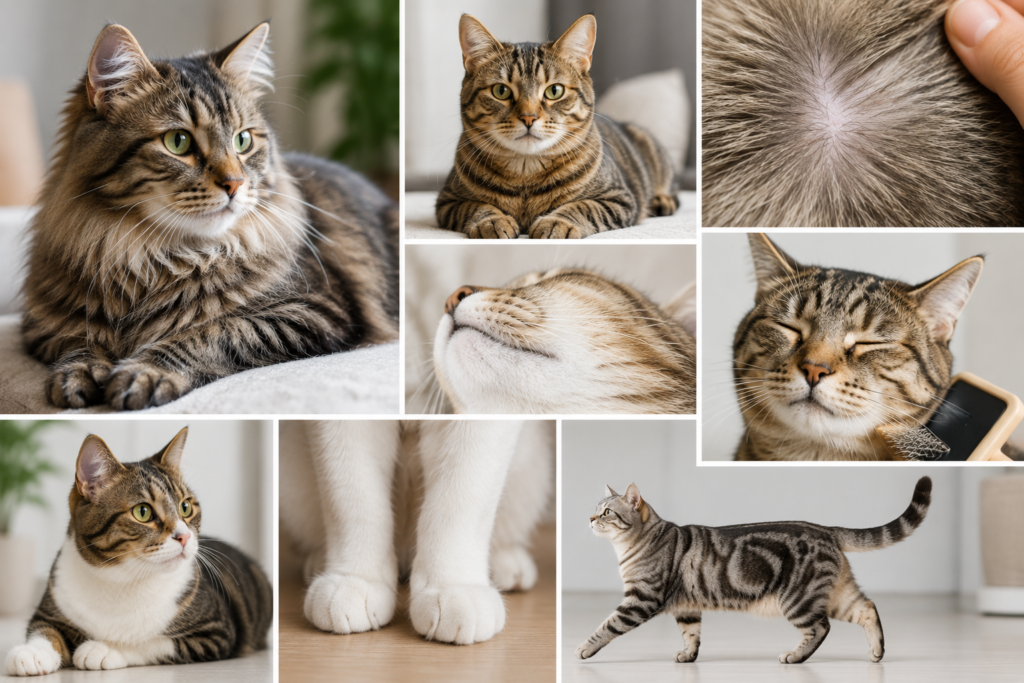
- Cat wipes: Specifically formulated, unscented wipes for spot cleaning.
- Dry shampoo/powder: Absorbs oil without water; useful for anxious cats.
- Regular brushing: Reduces shedding, distributes natural oils, and prevents mats often the best substitute for bathing.
- Damp cloth cleaning: A soft, warm, damp cloth can handle small messes without a full bath.
Expert Insight: What Veterinarians Generally Recommend
Veterinary guidance consistently supports a simple rule: bathe only when necessary, not on a fixed schedule. Unnecessary bathing can:
- Damage the skin’s natural moisture barrier
- Increase stress hormones in sensitive cats
- Lead to a damaged trust relationship between cat and owner
If you’re ever unsure whether your cat’s skin, coat, or behavior indicates a genuine need for bathing, a veterinarian or professional groomer can assess your specific cat and provide tailored advice this is especially important for kittens, senior cats, or cats with pre existing health conditions.
Final Verdict: Do Cats Need Baths?
To sum up: cats generally do not need regular baths thanks to their natural self-grooming ability, but bathing becomes necessary in specific situations skin issues, mobility limitations, mess, medical treatment, or certain low grooming breeds. Understanding your cat’s individual coat, health, and behavior is the key to deciding when (and if) a bath is truly needed. Do cats need baths depend on your cat condition.
By following the guidance above proper preparation, gentle technique, and knowing the warning signs you can keep your cat clean, healthy, and stress free without over bathing.
Frequently Asked Questions (FAQ)
Q1: Do cats need baths if they’re indoor-only? Generally, no. Indoor cats stay relatively clean and rely on self-grooming. Baths are only needed for specific issues like stickiness, skin conditions, or mobility limitations.
Q2: Can I bathe my cat with regular soap? No. Human soap and shampoo have a different pH than a cat’s skin and can cause dryness or irritation. Always use a cat-specific shampoo.
Q3: Do kittens need baths? Kittens under 4 weeks old should not be bathed unless directed by a vet, as they can’t regulate their body temperature well. Older kittens can be bathed occasionally if truly needed.
Q4: How do I calm my cat during a bath? Use lukewarm water, speak softly, keep sessions short, and offer treats afterward to build positive associations.
Q5: Do all cat breeds need the same bathing routine? No. Hairless breeds like Sphynx need more frequent bathing due to oil buildup, while most short-haired cats need almost none..