
If you want to keep your feline friend clean, comfortable, and shedding-free, choosing the right cat grooming products is the first step. The right cat grooming products don’t just make your cat look good they prevent hairballs, reduce matting, control shedding, and even help you spot skin issues early. In this guide, you’ll find the exact tools, brushes, shampoos, and grooming kits that real cat owners and groomers trust, plus simple tips to use them the right way even if you’ve never groomed a cat before.
Whether you have a short-haired tabby or a fluffy Persian, this guide breaks down everything in plain, easy to understand language so you can build the perfect at home grooming routine.
Why Cat Grooming Products Matter for Your Cat’s Health
Cats groom themselves naturally, but that doesn’t mean they don’t need your help. Regular use of proper cat grooming products supports:
- Healthier skin and coat – removing dead hair and dirt improves blood circulation
- Fewer hairballs – less loose fur means less fur your cat swallows
- Early detection of health issues – fleas, ticks, lumps, or dry skin are easier to spot during grooming
- Reduced shedding around the house – deshedding tools cut loose fur significantly
- Stronger bond between you and your cat – grooming builds trust and comfort
Veterinarians and professional groomers agree that a consistent grooming routine, supported by the right tools, is one of the simplest ways to improve a cat’s overall wellbeing without expensive vet visits.
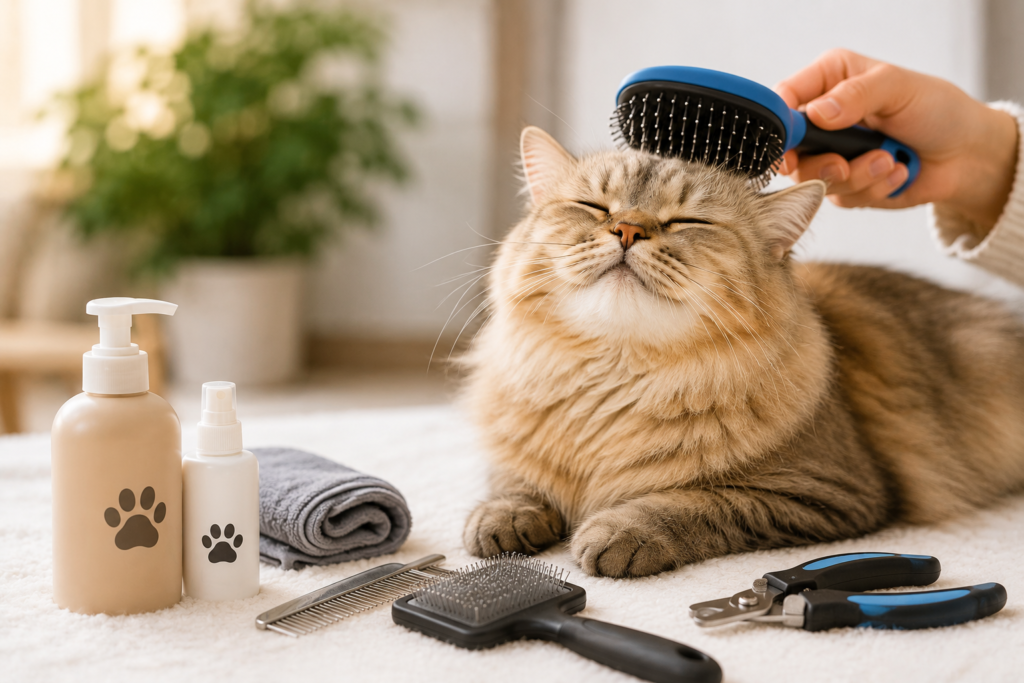
Top 7 Must-Have Cat Grooming Products Every Owner Needs
Here are the 7 essential cat grooming products that cover every part of a complete grooming routine from brushing to bathing to nail care.
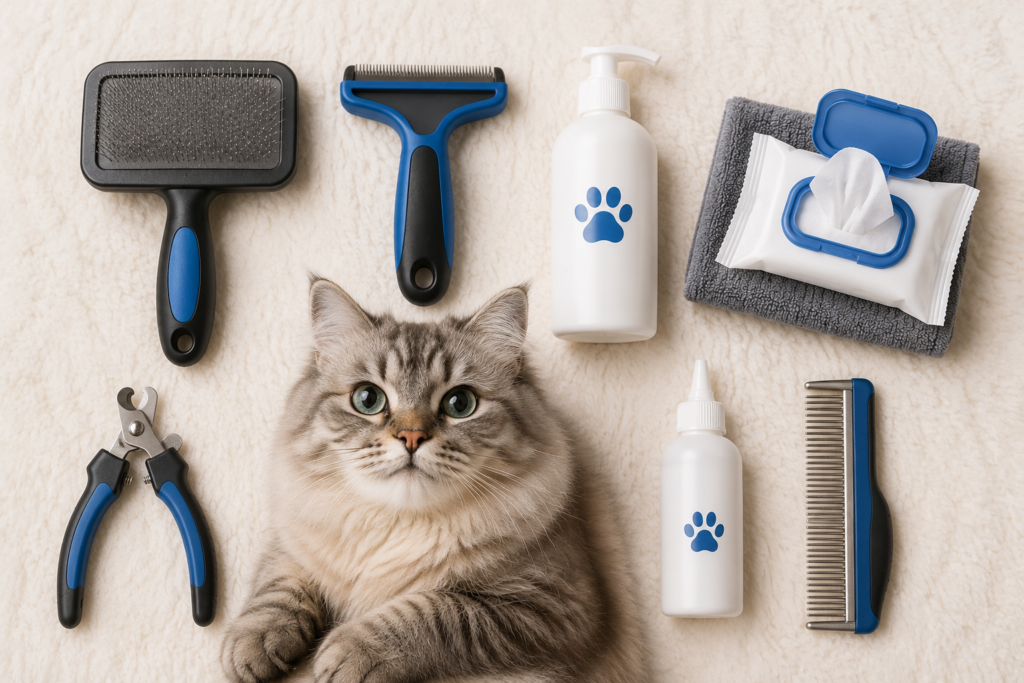
1. Slicker Brush for Daily Deshedding
A slicker brush is the backbone of any good grooming kit. Its fine, short wires gently remove loose fur and small tangles without hurting sensitive skin. This is ideal for daily use on cats with medium to long fur.
2. Deshedding Tool for Heavy Shedding Seasons
During spring and fall, cats shed much more than usual. A dedicated deshedding tool reaches deep into the undercoat and removes loose fur that regular brushes miss, cutting shedding by a noticeable margin.
3. Cat-Safe Shampoo for Bath Time
Human shampoo is too harsh for a cat’s skin pH. A gentle, cat formulated shampoo ideally fragrance-free and tear-free keeps the coat clean without causing dryness or irritation.
4. Nail Clippers Designed for Cats
Cat nail clippers are smaller and curved differently than human or dog clippers, making it safer and easier to trim without cutting the quick. Regular nail trims also protect your furniture and skin from accidental scratches.
5. Grooming Wipes for Quick Touch-Ups
Grooming wipes are perfect for cats who dislike full baths. They freshen the coat, remove light dirt, and can be used between full grooming sessions.
6. Ear Cleaning Solution
A cat-safe ear cleaner helps prevent wax buildup and infections, especially in cats prone to ear issues. This is a simple step many owners overlook.
7. De-Matting Comb for Long-Haired Cats
Long haired breeds like Persians and Maine Coons are prone to painful mats. A de matting comb with rounded teeth gently works through tangles without pulling on the skin.
How to Choose the Right Cat Grooming Products for Your Cat’s Coat Type
Not every cat needs the same grooming kit. Here’s how to match cat grooming products to your cat’s specific coat:
- Short-haired cats – a soft bristle brush and grooming glove are usually enough
- Medium-haired cats – add a slicker brush and occasional deshedding tool
- Long-haired cats – a full kit with a de-matting comb, slicker brush, and deshedding tool is essential
- Senior cats or cats with sensitive skin – choose soft-bristle tools and hypoallergenic shampoo
- Kittens – introduce grooming slowly with soft brushes and short sessions
Choosing tools based on coat type not only improves results but also makes grooming a more comfortable experience for your cat.
5 Common Cat Grooming Mistakes to Avoid
Even with the best cat grooming products, mistakes can make grooming stressful for both you and your cat.
- Brushing too hard – always use gentle, short strokes, especially near the belly and legs
- Skipping nail trims – overgrown nails can curl into the paw pad and cause pain
- Using human shampoo or soap – this disrupts your cat’s natural skin barrier
- Ignoring mats until they’re severe – small tangles are easier and safer to remove early
- Grooming during high-stress moments – always wait until your cat is calm and relaxed
Avoiding these mistakes makes grooming sessions faster, safer, and far more enjoyable for your cat.
Step-by-Step Guide: How to Groom Your Cat at Home
Follow this simple 6-step routine using your cat grooming products for the best results:
- Start with a calm cat – pick a quiet time when your cat is relaxed, not playful or anxious
- Brush first – use a slicker brush to remove loose fur and check for tangles
- Work through mats gently – use a de-matting comb on any tangled areas
- Bathe only if needed – most cats don’t need frequent baths; use cat-safe shampoo when they do
- Trim nails carefully – trim only the sharp tip, avoiding the pink quick
- Finish with ear and eye checks – wipe gently with a damp cloth or ear-cleaning solution
Doing this once or twice a week keeps your cat’s coat healthy between full grooming sessions.
Conclusion: Build a Grooming Routine That Works
Investing in the right cat grooming products is one of the easiest ways to improve your cat’s comfort, health, and appearance. From a simple slicker brush to a complete de-matting kit, the right tools used consistently and gently turn grooming from a chore into a bonding ritual your cat can actually enjoy. Start with the basics, adjust based on yo
Frequently Asked Questions About Cat Grooming Products
Q1: What are the best cat grooming products for beginners? A slicker brush, cat-safe shampoo, and nail clippers are the three essential starter tools every new cat owner should have.
Q2: How often should I use cat grooming products on my cat? Short-haired cats need brushing once or twice weekly, while long-haired cats benefit from daily brushing to prevent mats.
Q3: Can I use dog grooming products on my cat? No. Cats have different skin pH and sensitivity levels, so always choose products specifically labeled safe for cats.
Q4: Do indoor cats still need grooming products? Yes. Even indoor cats shed, develop mats, and need nail trims, so a basic grooming kit is still necessary.
Q5: What’s the safest way to introduce grooming tools to a nervous cat? Start with short 2–3 minute sessions, use treats as positive reinforcement, and gradually increase grooming time as your cat gets comfortable.