
Cat wound care is one of the most important skills every cat owner should understand, because even small cuts, bites, or scratches can quickly turn into serious infections if not treated properly. Whether your cat got hurt in a fight, an accident, or a minor scrape at home, knowing the right cat wound care steps can mean the difference between a quick recovery and a painful vet emergency.
In this guide, we’ll walk you through how to recognize different types of wounds, what you can safely treat at home, when to rush to the vet, and how to support your cat’s healing process explained in simple, easy to understand language backed by veterinary best practices.
Why Proper Cat Wound Care Matters
Cats are naturally curious and agile, which unfortunately also makes them prone to injuries — jumping accidents, outdoor fights, sharp objects, or even minor scratches from rough play. Because cat saliva and claws carry bacteria, even a small puncture wound can develop into a cat abscess or deep infection within 24–48 hours if left untreated.
Understanding proper wound care for cats helps you:
- Prevent infection and abscess formation
- Reduce pain and discomfort for your cat
- Speed up the natural healing process
- Know exactly when home care is enough and when it’s not
Types of Wounds in Cats
Before starting any treatment, it’s important to correctly identify the wound type, since cat injury treatment varies significantly depending on severity.
Some types for proper cat wound care are given below:
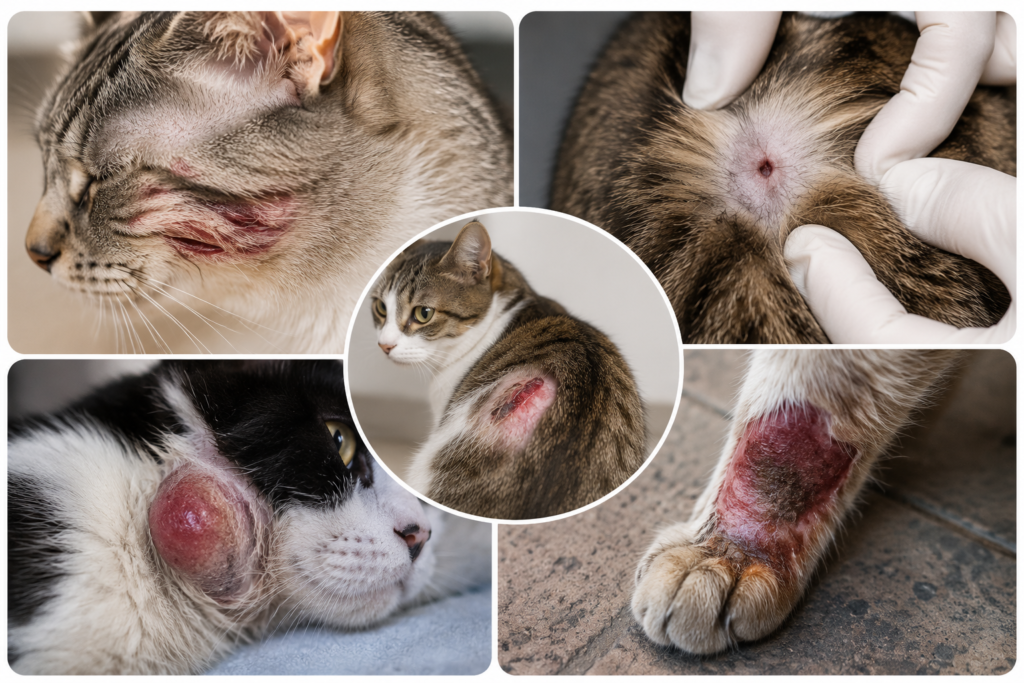
1. Superficial Scratches or Abrasions
Minor surface-level scrapes, usually from play, minor falls, or brushing against something rough. These are the easiest to manage at home.
2. Puncture Wounds (Bite Wounds)
Common after cat fights. These look small on the surface but can be deep, and they carry a high risk of infection because bacteria get trapped inside.
3. Lacerations (Cuts)
Deeper skin tears, often from sharp edges, wires, or accidents. These may require stitches depending on depth and location.
4. Abscesses
A pus-filled swelling that forms when a puncture wound becomes infected. Often appears days after the original injury as a warm, painful lump.
5. Burns or Chemical Wounds
Less common but serious requires immediate veterinary attention, not home treatment.
Signs of an Infected Wound
Recognizing infection early is a critical part of effective feline wound healing. Watch for:
- Redness, swelling, or warmth around the wound
- Discharge (yellow, green, or foul-smelling pus)
- Persistent licking or biting at the area
- Lethargy, fever, or loss of appetite
- Wound that isn’t closing after several days
If you notice any of these signs, home treatment should stop, and a veterinary visit is necessary.
How to Treat a Minor Cat Wound at Home (Step-by-Step)
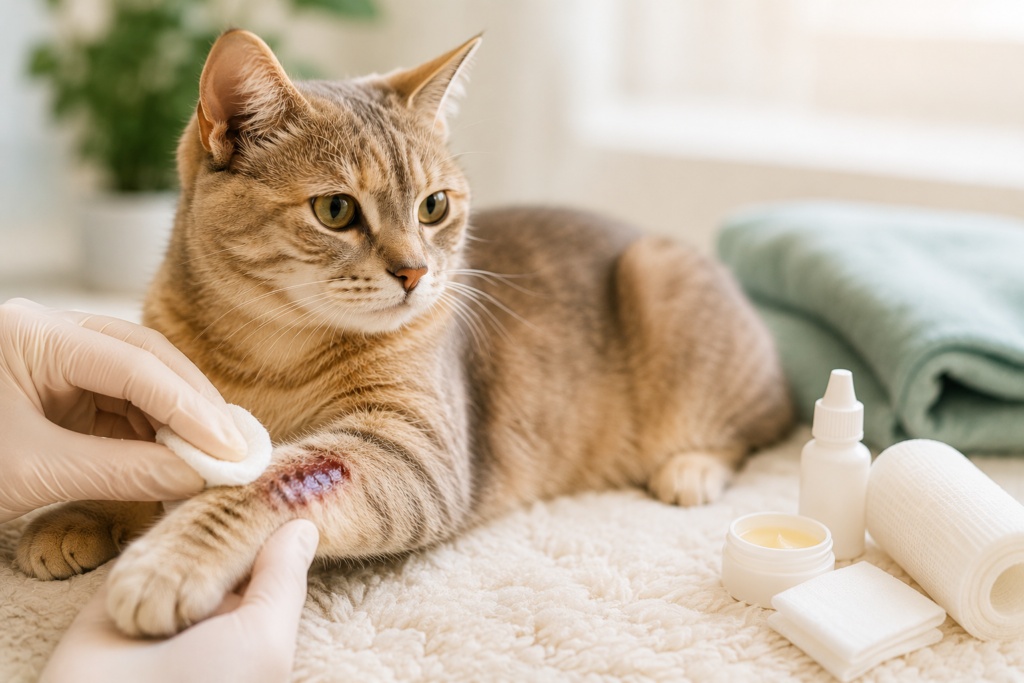
For small, shallow wounds only not deep punctures, large lacerations, or anything actively bleeding heavily — you can follow this basic cat first aid process.
Step 1 — Restrain Gently
Wrap your cat securely in a towel (“purrito style”) to keep them calm and prevent scratching during treatment.
Step 2 — Clip the Fur Around the Wound
Trim surrounding fur carefully with blunt-tipped scissors so hair doesn’t get trapped in the wound and cause further irritation.
Step 3 — Clean the Wound
Use a vet approved saline solution or diluted antiseptic (like chlorhexidine, diluted as directed) to gently flush the wound. Avoid hydrogen peroxide, alcohol, or human antiseptics, as these can damage healthy tissue and slow healing.
Step 4 — Pat Dry, Don’t Rub
Use a clean gauze pad to gently pat the area dry rather than rubbing, which can reopen the wound.
Step 5 — Apply a Vet-Approved Ointment (If Recommended)
Only use topical treatments specifically approved for cats by your veterinarian, since many human ointments are toxic if licked off.
Step 6 — Prevent Licking
Use an Elizabethan collar (cone) or a recovery suit to stop your cat from licking or biting the wound, which can delay healing and introduce more bacteria. It is necessary for cat wound care.
Step 7 — Monitor Daily
Check the wound once or twice daily for the first week for any signs of swelling, discharge, or worsening condition.
When to See a Veterinarian Immediately
Some wounds should never be treated at home. Seek professional cat wound treatment urgently if you notice:
- Deep puncture wounds, especially from another animal’s bite
- Heavy or uncontrolled bleeding
- Visible bone, muscle, or tendon
- Wounds near the eyes, mouth, or genitals
- Swelling that appears days after a minor injury (possible abscess)
- Signs of shock pale gums, rapid breathing, weakness
- Any wound your cat received from a fall, car accident, or unknown object
Abscesses in particular almost always require veterinary draining and antibiotics squeezing or opening them at home can cause severe complications.
Cat Wound Healing Timeline
Wound healing time depends on depth, location, and whether infection develops. As a general guide:
Minor scratch or abrasion typically heals in 3–7 days.
Shallow puncture wound usually takes 7–10 days, with regular monitoring for infection.
Stitched laceration generally heals within 10–14 days.
Drained abscess takes about 10–14 days to heal, along with a course of antibiotics.
Deep or complicated wounds can take 2–4 weeks or longer, and require full veterinary supervision throughout recovery.
Supporting Your Cat’s Recovery
Beyond direct wound treatment, a few extra steps support faster, smoother healing:
- Nutrition: A balanced, protein-rich diet supports tissue repair.
- Hydration: Ensure fresh water is always available, especially if your cat is on antibiotics.
- Rest: Limit jumping, running, and rough play until the wound is fully closed.
- Stress reduction: A calm, quiet recovery space reduces cortisol, which can otherwise slow healing.
- Follow-up vet visits: For stitched wounds or abscesses, always attend recheck appointments to confirm proper healing.
Common Mistakes in Cat Wound Care to Avoid
- Using human antiseptics like hydrogen peroxide or iodine at full strength (damages healthy tissue)
- Covering wounds with tight bandages without vet guidance (can cut off circulation)
- Ignoring small puncture wounds, assuming they’ll “heal on their own”
- Letting your cat lick the wound continuously
- Delaying vet care when swelling or discharge appears
Expert Insight: What Veterinarians Recommend
Veterinary professionals generally agree that any wound deeper than a surface scratch, or any bite wound, should be evaluated by a vet within 24 hours even if it looks minor at first. This is because cat mouths carry bacteria like Pasteurella multocida, which can cause rapid infection deep under the skin, often invisible from the outside until swelling appears days later.
For simple surface scratches, gentle cleaning and monitoring at home is usually sufficient, but owners should never hesitate to call a vet if there’s any uncertainty about a wound’s severity.
Frequently Asked Questions (FAQ)
Q1: Can I use human antiseptic on my cat’s wound? No. Products like hydrogen peroxide, rubbing alcohol, or iodine at full strength can damage healthy tissue and slow healing. Use only vet-approved solutions like diluted chlorhexidine or saline.
Q2: How do I know if my cat’s wound is infected? Look for redness, swelling, warmth, discharge, bad odor, or your cat becoming lethargic or losing appetite. Any of these signs mean a vet visit is needed.
Q3: Should I bandage my cat’s wound at home? Only if instructed by a vet. Improper bandaging can cut off circulation or trap bacteria, making the wound worse.
Q4: How long does it take for a cat wound to heal? Minor scratches heal in about 3–7 days, while deeper wounds, punctures, or abscesses can take 10 days to several weeks, especially with veterinary treatment.
Q5: Why do bite wounds need extra care? Cat bites introduce bacteria deep under the skin, and because puncture wounds close quickly on the surface, bacteria get trapped inside leading to abscesses if not treated early.
Q6: Can I prevent my cat from licking its wound without a cone? A recovery suit (soft fabric bodysuit) can work as an alternative to a cone for some cats, but a vet can help you choose the safest option for your cat’s specific wound.
Final Thoughts on Cat Wound Care
Effective cat wound care comes down to three things: correctly identifying the type and severity of the wound, providing safe and gentle home treatment when appropriate, and knowing exactly when professional veterinary care is non-negotiable. Bite wounds, deep punctures, and any sign of infection should always be checked by a vet, while minor scratches can often be managed safely at home with proper cleaning and monitoring.
By staying alert to your cat’s healing progress and avoiding common mistakes, you can help your feline companion recover quickly, safely, and comfortably.
Pingback: Should You Bathe Cats? 7 Vet-Backed Truths - catiology.com