
Ear mites in cats are tiny parasites that can cause intense itching, irritation, and inflammation inside the ears. If your cat is constantly scratching its ears, shaking its head, or developing dark, crumbly debris in the ear canal, ear mites may be one possible cause.
These parasites, usually identified as Otodectes cynotis, live in and around the ear canal and can spread easily between animals through close contact. Although ear mites are treatable, leaving an infestation untreated can result in painful inflammation, skin damage, or secondary ear infections. This guide explains the common signs of ear mites, how cats become infected, how veterinarians diagnose and treat the problem, and what you can do to help prevent reinfection.
What Are Ear Mites in Cats?
Ear mites in cats are microscopic parasites that live on the surface of the ear canal and surrounding skin. The species most commonly associated with feline infestations is Otodectes cynotis. Unlike fleas or ticks, these mites spend most of their life cycle on the animal, where they feed on skin debris and fluids.
The parasites reproduce quickly, so an infestation can increase considerably if it is left untreated. Their movement and feeding irritate the sensitive tissues of the ear, which can trigger inflammation and excessive wax or discharge.
Although the mites are extremely small, their effects can be noticeable. A veterinarian can confirm their presence by examining material collected from the ear under a microscope or by using an otoscope to inspect the ear canal.
What Do Ear Mites Look Like in Cats?
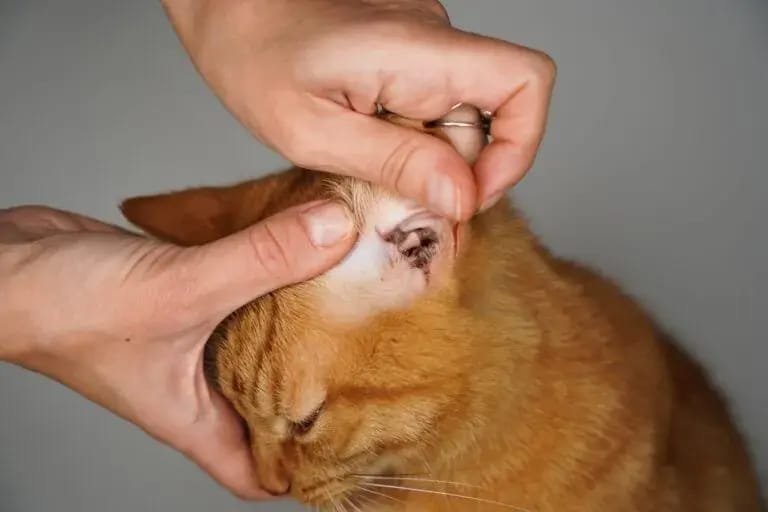
Ear mites in cats are too small to identify reliably with the naked eye. The mites themselves may appear as tiny, pale moving specks when viewed closely, but what owners usually notice is the material they leave behind inside the ear. Affected ears often contain dark brown or black debris with a dry, crumbly texture.
It is sometimes compared with coffee grounds. The ear canal may also look red, irritated, or swollen, particularly when the infestation has been present for some time. The appearance can provide a useful clue, but it is not enough to confirm the cause. Similar discharge can occur with bacterial or yeast infections and other ear problems. A veterinary examination is the safest way to determine what is actually affecting your cat’s ears.
Symptoms of Ear Mites in Cats
Ear mites in cats can cause anything from mild irritation to severe discomfort. The first clue is often a change in your cat’s behavior. A cat that suddenly spends more time scratching around its ears or shaking its head may be trying to relieve irritation inside the ear canal.
Frequent Scratching
Persistent scratching is one of the most common signs. Your cat may use its hind legs to scratch at the ears repeatedly or rub the side of its face against furniture, carpets, or other surfaces. Frequent head shaking can occur alongside the scratching as the cat tries to get rid of the irritation.
Red or Inflamed Ears
Look at the inside of the ear flap if your cat allows it. Irritated ears may appear red, swollen, or warmer than usual. Continued scratching can make the inflammation worse and may eventually cause small cuts or scabs around the ear.
Dark Ear Discharge
A cat with an ear mite infestation may develop a dark brown or black buildup inside the ear. It can be dry and crumbly or mixed with wax and appear similar to coffee grounds. This type of discharge is a useful warning sign, but it does not prove that mites are responsible. Yeast infections, bacterial infections, and other ear conditions can produce abnormal discharge as well.
Ear Sensitivity
As inflammation develops, the ears may become uncomfortable or painful. Your cat might pull away, become restless, or resist when you try to touch or examine the affected ear. A sudden reaction to gentle handling is a good reason to stop examining the ear yourself and seek veterinary advice.
Scratches, Scabs, or Hair Loss
Repeated scratching can injure the skin around the ears. You may notice small wounds, scabs, or areas where fur has become thin. These injuries can become infected if the scratching continues.
Unusual Ear Position
Some cats may hold an affected ear differently from normal. A persistent head tilt is more concerning, particularly when accompanied by balance problems, difficulty walking, or other neurological changes. These signs should not be assumed to be caused by simple ear mites and warrant prompt veterinary assessment.
How Do Cats Get Ear Mites?
Direct Contact With an Infected Animal
Ear mites in cats are highly contagious and most commonly spread when an infected cat comes into close contact with another animal. The mites can move between animals during grooming, playing, sleeping together, or other close interactions.
Exposure to Other Pets
Cats are not the only animals that can carry these parasites. Dogs and other susceptible animals may also become infested and can pass mites to a cat through close contact. This is particularly important in homes where several pets live together.
Outdoor and Group Environments
Cats that spend time outdoors may encounter infected animals more easily. Shelters, catteries, boarding facilities, grooming environments, and other places where many animals share space can also increase the chance of exposure.
Can Ear Mites Spread Through Bedding?
Mites can sometimes survive for a limited period away from the host, so contaminated bedding, grooming equipment, or shared items may contribute to transmission. However, direct contact between animals is generally the more important route of spread.
If one pet in a multi-animal household is diagnosed with ear mites, the other pets should also be discussed with a veterinarian. Treating only the visibly affected animal can allow the infestation to circulate between untreated pets.
How Are Ear Mites in Cats Diagnosed?
Ear mites in cats cannot be confirmed reliably from symptoms alone. Scratching, head shaking, redness, and dark discharge can point toward an infestation, but similar signs occur with bacterial infections, yeast overgrowth, allergies, and other ear disorders.
Ear Examination
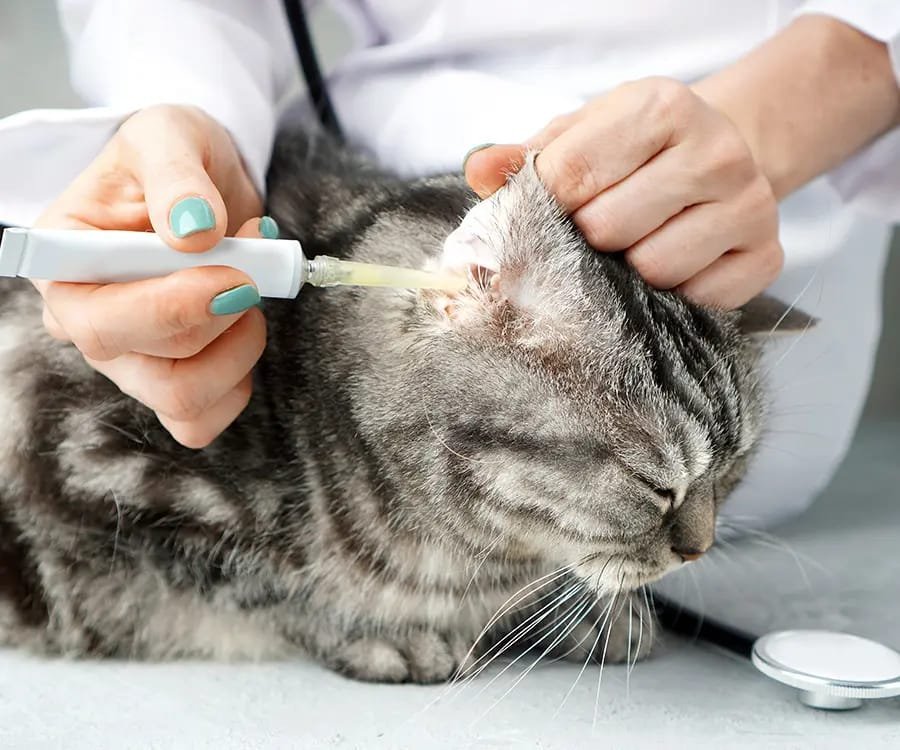
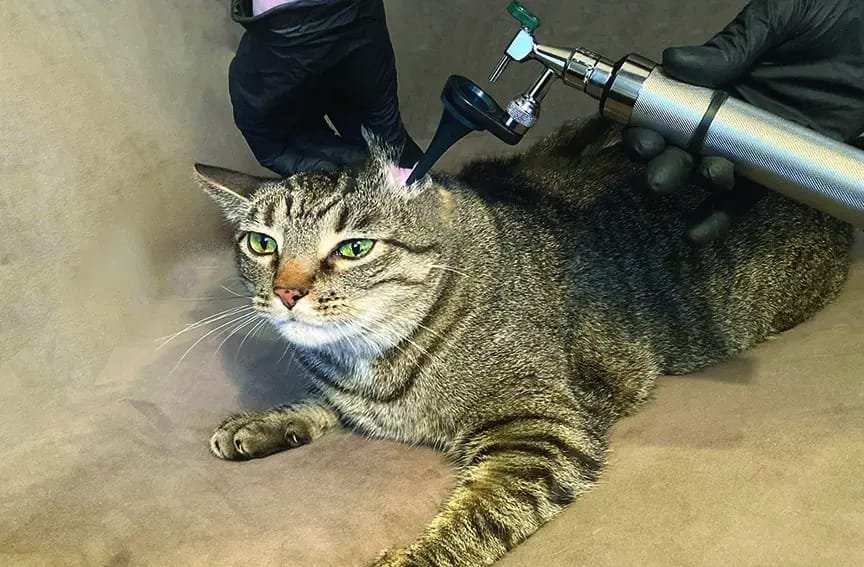
A veterinarian will usually begin by examining the outer ear and ear canal. An otoscope can help the vet look for inflammation, discharge, parasites, or changes deeper inside the ear.
Some cats have very painful or irritated ears and may not tolerate a thorough examination while awake. In these situations, the veterinarian will decide how best to examine the ear safely.
Microscopic Examination
A small sample of material from the ear may be collected with a swab and examined under a microscope. This can help identify mites or their eggs and can also reveal other organisms that may be contributing to the problem.
This step is particularly useful when the symptoms could have more than one possible cause. Finding the underlying problem allows treatment to be chosen appropriately rather than guessing based on the appearance of the discharge.
You’re right. The previous version repeats points we’ve already covered about diagnosis, secondary infections, and transmission. The treatment section should focus strictly on what treatment involves.
Treatment for Ear Mites in Cats
Treatment for ear mites in cats usually involves a veterinary-approved medication that kills the parasites. The choice depends on factors such as your cat’s age, overall health, the severity of the infestation, and whether other ear problems are present.
Antiparasitic Medication
Veterinarians may use topical or systemic antiparasitic medicines to eliminate the mites. Some products are applied to the skin, while others may be used specifically for the ears. Your veterinarian will choose a suitable product and give you instructions on how and when to use it.
Never use a dog flea or mite product on a cat unless your veterinarian has confirmed that it is safe. Certain ingredients found in products made for dogs can be toxic to cats.
Ear Cleaning
Heavy buildup inside the ear may need to be removed so the medication can reach the affected area properly. A veterinarian may clean the ears during the appointment or show you how to use a recommended ear-cleaning solution safely at home.
Avoid digging into the ear with cotton swabs or using household substances to loosen the debris. An inflamed ear is easily damaged.
Managing Ongoing Inflammation
Some cats remain uncomfortable even after the parasites are being treated. If the ear is severely inflamed or painful, a veterinarian may prescribe additional medication to reduce inflammation and make the recovery process more comfortable.
Home Treatment for Ear Mites in Cats
Home care can support treatment, but it should not replace a veterinary diagnosis. Ear mites in cats can look similar to bacterial or yeast infections, so treating the wrong condition may make the problem worse or delay proper care.
Avoid Home Remedies
Do not put vinegar, alcohol, essential oils, or other household mixtures into your cat’s ears. These substances can irritate sensitive tissue and may be especially harmful when the ear is already inflamed or injured.
Use Vet-Approved Products
Once ear mites have been confirmed, use the medication recommended by your veterinarian and follow the instructions carefully. Never use a dog product on your cat unless a veterinarian has specifically confirmed that it is safe.
Clean the Ears Carefully
Your veterinarian may recommend an ear-cleaning solution to remove excess debris. Follow their instructions rather than scraping the ear or inserting cotton swabs deep into the canal.
Clean the Bedding
Wash your cat’s bedding and clean frequently used grooming items to reduce the chance of reinfestation. If you have other pets, ask your veterinarian whether they should also be checked or treated.
Watch Your Cat
Improvement should occur with appropriate treatment, but persistent scratching, worsening redness, pain, swelling, discharge, or a foul smell means your cat needs another veterinary examination.
Recovery Time
The recovery time varies from one cat to another. Mild cases may start to improve soon after effective treatment begins, while cats with heavy infestations or secondary infections can take longer to recover.
Follow the Full Treatment
Don’t stop medication simply because your cat has stopped scratching. Different stages of the parasite may be present during an infestation, so completing the treatment schedule is important.
Watch for Improvement
Less scratching, reduced head shaking, and cleaner ears are signs that your cat may be responding to treatment. The ears should gradually become less irritated as the infestation clears.
Recheck Persistent Symptoms
If symptoms continue or return after treatment, contact your veterinarian. Your cat may need another examination to check for remaining mites, a secondary infection, or a different ear condition. Avoid extending, repeating, or changing medication without veterinary guidance.
Preventing Ear Mites in Cats
Preventing ear mites in cats is mainly about reducing exposure and keeping parasite control up to date. This is especially important in homes with several pets or cats that regularly interact with animals outdoors.
Protect Against Parasites
Ask your veterinarian about a parasite-prevention product suitable for your cat. Some veterinary-approved products protect against ear mites as well as other parasites.
Check New Pets
If you’re bringing another cat or dog into your home, have the animal checked by a veterinarian before introducing it to your existing pets. This can help identify parasites and other contagious conditions early.
Clean Shared Items
When an infestation occurs, clean bedding, carriers, and grooming equipment according to veterinary advice. These steps can help reduce the chance of mites being passed back to a treated pet.
Limit Contact During Treatment
If your cat is being treated for an active infestation, follow your veterinarian’s advice about contact with other pets. In multi-pet households, exposed animals may need assessment to prevent the problem from circulating.
Routine Veterinary Care
Regular veterinary checkups make it easier to spot ear problems before they become severe. If your cat develops repeated scratching, head shaking, or unusual ear discharge, have the ears examined rather than relying on routine cleaning alone.
When to See a Veterinarian
Mild ear irritation can sometimes be easy to overlook, but persistent symptoms should not be ignored. Ear mites in cats can cause considerable discomfort, and untreated ear problems may become more complicated.
Persistent Scratching
If your cat keeps scratching its ears or shaking its head despite basic care, arrange a veterinary examination. Ongoing irritation may mean the underlying problem has not been treated.
Pain or Swelling
Redness, swelling, tenderness, or resistance when the ears are touched can indicate significant inflammation. Avoid trying to clean a painful ear yourself until your cat has been examined.
Unusual Discharge
A large amount of dark discharge, pus-like material, blood, or a strong unpleasant odor deserves veterinary attention. These signs may occur with an infection or another ear disorder.
Balance Problems
A persistent head tilt, stumbling, loss of balance, or unusual eye movements can indicate that the problem is affecting deeper parts of the ear. These symptoms require prompt veterinary assessment.
Symptoms That Return
If the problem improves and then comes back, your cat may need another examination. Persistent symptoms can result from incomplete treatment, reinfestation, a secondary infection, or a different underlying condition.
FAQ
Are ear mites in cats dangerous?
They are usually treatable, but untreated infestations can cause painful inflammation, skin damage, and secondary infections. Severe symptoms require veterinary care.
How long do ear mites live in cats?
Ear mites can continue their life cycle on a cat if the infestation is not fully treated. Complete the treatment plan recommended by your veterinarian.
Can indoor cats get ear mites?
Yes. Indoor cats can still encounter ear mites through contact with infected pets or animals. Living indoors lowers exposure but does not eliminate the risk.
Can ear mites spread between pets?
Yes. Ear mites can spread between cats and dogs through close contact. Other pets in the household may also need to be checked.
Can humans get ear mites from cats?
Human infestation is uncommon because these mites are mainly adapted to animals. They generally do not establish a lasting infestation in people.
The FAQ section is complete. The next part should be a short conclusion that reinforces the main takeaway without repeating the entire article.
Conclusion
Ear mites in cats are common and treatable, but they should not be diagnosed from dark ear debris or scratching alone. Proper veterinary assessment helps identify the cause and ensures your cat receives the right treatment.
If your cat shows persistent itching, head shaking, painful ears, or unusual discharge, arrange a veterinary examination. Prompt treatment can prevent irritation from developing into a more serious ear problem.