
Knowing how to clean a cat’s eyes properly is one of the most important parts of everyday feline eye care, yet many cat owners overlook it until they notice crusty discharge, tear stains, or watery eyes. Cats groom themselves constantly, but they cannot always reach the delicate area around their eyes, especially breeds with flat faces like Persians or Himalayans. Regular, gentle eye cleaning helps prevent infections, removes irritating debris, and keeps your cat comfortable and healthy. Beyond hygiene alone, this simple habit also strengthens the bond of trust between you and your cat, since regular handling around the face makes future grooming, vet visits, and medication far less stressful for everyone involved.
In this guide, you will learn exactly how to clean a cat’s eyes safely at home, what supplies you need, warning signs that require a veterinarian, and simple habits that keep your cat’s eyes clear and bright for years to come. Whether you have a playful kitten, a senior cat, or a breed prone to frequent tearing, these steps are easy to follow and gentle enough for cats of every age and temperament.
Why Cat Eye Cleaning Matters for Feline Eye Health
A cat’s eyes are sensitive and can easily collect dust, dried tears, sleep crust, and discharge throughout the day. If this buildup is left untreated, it can harden around the eyelids, cause irritation, or even lead to a bacterial infection. Breeds with shorter noses and flatter faces are especially prone to excessive tearing because their tear ducts do not drain as efficiently as other cats. Kittens, senior cats, and cats with existing eye conditions also tend to need more frequent attention.
Beyond hygiene, cleaning your cat’s eyes gives you a chance to closely monitor their overall eye health. Redness, swelling, unusual odor, or thick colored discharge can be early signs of conjunctivitis, allergies, or an upper respiratory infection. Making eye cleaning a regular part of your grooming routine means you are far more likely to catch these problems early, before they become serious.
Common Signs of Cat Eye Discharge and Tear Stains
Not every cat needs daily eye cleaning, but certain signs tell you it’s time to grab a soft cloth and get started. Watch for a buildup of dark or reddish brown crust in the corners of the eyes, which is a common and usually harmless tear stain. Watery eyes, mild redness, or a small amount of clear discharge after waking up are also normal and simply need light wiping.
However, some symptoms indicate more than routine cleaning is needed. Thick yellow or green discharge, swollen or squinted eyes, excessive blinking, pawing at the face, or a strong unpleasant smell are signs of a possible cat eye infection or injury. In these cases, cleaning alone will not solve the underlying issue, and a veterinary visit is strongly recommended alongside gentle at home care. How to clean a cat’s eyes at home.

Supplies You Need Before You Start Cleaning Cat Eyes
Having the right supplies ready makes the process quicker, safer, and far less stressful for your cat. You do not need anything fancy or expensive; most items are likely already in your home. This helps how to clean a cat’s eyes.
- Soft, clean cotton balls or a lint free cloth
- Warm (not hot) distilled or filtered water, or a vet approved saline solution
- A small towel to wrap your cat if they are wriggly
- Cat safe eye wipes (optional, especially good for tear stains)
- Treats to reward calm behavior afterward
Avoid using tissues, paper towels, or anything with rough fibers, since these can scratch the eye or leave behind lint that causes further irritation. Never use human eye drops, alcohol based wipes, or hydrogen peroxide anywhere near your cat’s eyes, as these products can cause serious harm. Every cat’s owner know how to clean a cat’s eyes.
How to Clean a Cat’s Eyes Step by Step
This is the core routine for how to clean a cat’s eyes safely and comfortably at home. Take your time and stay calm, since cats can sense stress and may become more resistant if you rush. These steps help to provide information how to clean a cat’s eyes.
Step 1: Prepare a Calm Environment
Choose a quiet room with good lighting and minimal distractions. If possible, clean your cat’s eyes after a meal or during a naturally relaxed moment, such as after playtime when your cat is more likely to settle down.
Step 2: Wet the Cotton Ball or Cloth
Dip a cotton ball or soft cloth into warm water or saline solution and gently squeeze out the excess liquid. The material should be damp, not dripping, since excess water running into the eye can cause discomfort.
Step 3: Wipe Gently From the Inner to Outer Corner
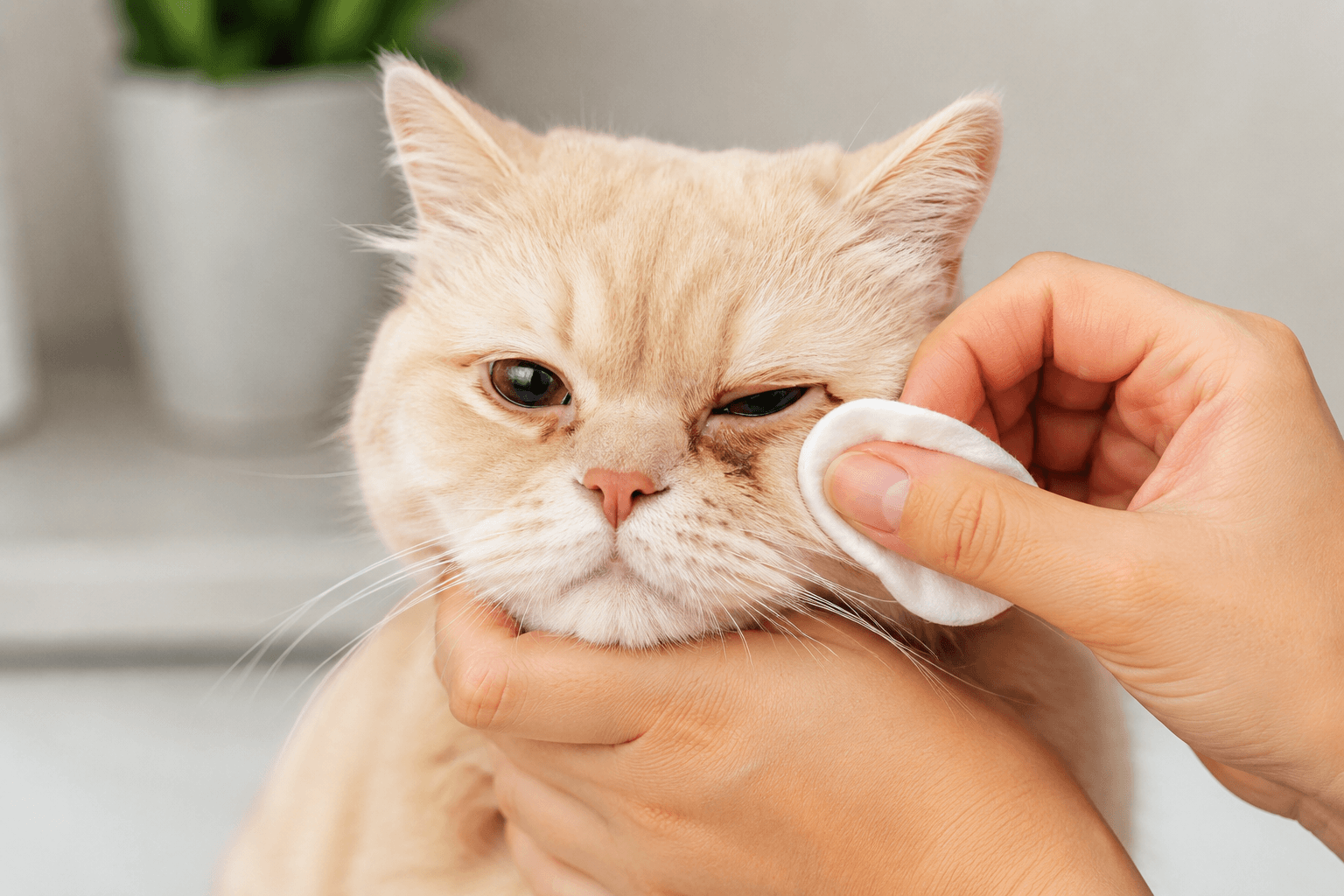
Hold your cat securely but gently, and wipe from the inner corner of the eye outward, following the natural direction of tear drainage. Use a fresh cotton ball for each eye to avoid transferring bacteria or infection from one eye to the other.
Step 4: Remove Stubborn Crust Slowly
If there is dried, crusted discharge, do not pull or scrape it off. Instead, hold a damp cotton ball gently against the crust for a few seconds to soften it, then wipe it away carefully once it loosens on its own.
Step 5: Dry the Area Softly
After cleaning, use a dry section of the cloth to gently pat the fur around the eye dry. This helps prevent excess moisture from causing tear stains or skin irritation in the surrounding fur.
Step 6: Reward Your Cat
Finish the session with a favorite treat, gentle praise, or a short play session. This builds a positive association so future eye cleaning sessions become easier over time.
How Often Should You Clean a Cat’s Eyes
Most healthy adult cats only need their eyes checked and lightly wiped once or twice a week as part of regular grooming. Breeds with flat faces, long haired cats, kittens, and senior cats often benefit from daily wiping since they are more prone to tearing and discharge buildup. If your cat has a known eye condition or is recovering from an infection, follow your veterinarian’s specific cleaning schedule, since cleaning too often can sometimes irritate healthy tissue just as much as cleaning too little allows buildup to accumulate.
Natural Home Remedies for Cat Eye Care
How to clean a cat’s eyes a t home. Many cat owners search for gentle, natural ways to support eye health alongside regular cleaning. Warm compresses made from a clean, damp cloth held gently over closed eyes for a minute or two can soothe mild irritation and loosen stubborn crust. Chamomile tea, cooled completely and strained thoroughly, is sometimes used as a mild natural rinse because of its gentle anti inflammatory properties, though it should never replace veterinary treatment for an actual infection.
Keeping the fur around your cat’s eyes trimmed short, especially in long haired breeds, also reduces how much hair traps moisture and debris near the eye. A clean, dust free living environment and a high quality diet rich in essential fatty acids can further support healthy tear production and reduce chronic discharge over time.
Common Mistakes to Avoid When Cleaning Cat Eyes
Even well meaning cat owners sometimes make small mistakes that cause unnecessary discomfort. Using the same cotton ball on both eyes is one of the most common errors, since it risks spreading infection from one eye to the other. Wiping too hard or picking at dried crust instead of softening it first can scratch the sensitive cornea and cause pain.
Another mistake is ignoring symptoms that clearly go beyond normal tear staining, such as persistent swelling or thick discharge, hoping the problem will resolve on its own. Cat eye infections rarely improve without proper treatment, and delaying a vet visit can allow a minor issue to become a more serious, harder to treat condition.
Cat Eye Infection Symptoms That Need a Veterinarian
While routine cleaning handles everyday discharge and tear stains, certain symptoms always warrant professional attention. Contact your veterinarian promptly if you notice one or both eyes appearing cloudy, a visible third eyelid covering part of the eye, sudden sensitivity to light, or your cat repeatedly pawing at their face. Thick discharge that returns quickly after cleaning, unequal pupil size, or visible injury to the eye itself are also urgent signs that should never be treated with home remedies alone.
Veterinarians can accurately diagnose the underlying cause, whether it is conjunctivitis, a corneal ulcer, allergies, or an upper respiratory infection, and prescribe appropriate treatment such as antibiotic eye drops or ointments that are safe specifically for feline use.
Tips for Making Eye Cleaning Stress Free
- Start by simply touching your cat’s face gently during regular petting sessions, long before you ever introduce a damp cloth, so they get used to the contact.
- Keep cleaning sessions short, ideally under a minute per eye, and always end on a positive note with a treat or affection.
- If your cat becomes highly stressed or aggressive during cleaning, consider wrapping them snugly in a towel, sometimes called the “purrito” method, to keep them calm and prevent scratching.
- Have a second person gently hold and soothe your cat while you clean, which can make the process smoother for both of you.
- Stay calm and patient throughout, since cats easily pick up on tension and may resist more if you seem rushed or anxious.
- Cats need bath to protect germs.
Conclusion
Learning how to clean a cat’s eyes is a simple but valuable skill that protects your cat’s comfort and long term eye health. With the right supplies, a gentle technique, and a calm approach, most cat owners can easily manage everyday tear stains and light discharge at home. Still, it’s essential to recognize the warning signs of infection or injury that require veterinary care, since prompt treatment always leads to better outcomes.
Every cat is different, so pay attention to your own cat’s normal patterns and adjust your cleaning routine as needed. If you ever feel unsure about a symptom, don’t hesitate to reach out to your veterinarian for guidance rather than guessing at home. By making eye cleaning a regular, positive part of your grooming routine, you’ll keep your cat’s eyes bright, clear, and healthy for years to come.
Frequently Asked Questions (FAQs)
Q1: Can I use plain water to clean my cat’s eyes?
Yes, warm distilled or filtered water is safe for routine cleaning. For sensitive eyes or persistent discharge, a vet approved saline solution is a gentler option.
Q2: Is it normal for cats to have some eye discharge every day?
A small amount of clear discharge, especially after sleeping, is normal. Thick, colored, or foul smelling discharge is not normal and should be checked by a veterinarian.
Q3: Why does my cat have dark tear stains under its eyes?
Tear stains are usually caused by excess tearing that oxidizes and darkens on the fur over time. They are more common in breeds with flat faces and are typically harmless, though persistent staining should be monitored.
Q4: Can I use baby wipes to clean my cat’s eyes?
No. Baby wipes often contain fragrances, alcohol, or chemicals that can irritate a cat’s sensitive eyes. Always use plain water, saline solution, or wipes specifically formulated for cats.
Q5: How do I know if my cat has an eye infection instead of normal discharge?
Signs of infection include thick yellow or green discharge, redness, swelling, squinting, or pawing at the eye. If you notice these symptoms, schedule a veterinary visit rather than relying on home cleaning alone.