
Watching two cats chase, wrestle, bite, or swat at each other can be confusing. Knowing how to tell if cats are playing or fighting is important because playful interactions are a normal part of feline behavior, while serious aggression can result in injuries and long-term tension between cats.
One moment they appear to be having fun, and the next they are rolling across the floor with their claws out. For cat owners, it can be difficult to know whether the cats are simply playing or whether the interaction has turned into a genuine fight.
Cats use chasing, pouncing, wrestling, batting, and even gentle biting during play. These behaviors can look surprisingly aggressive, especially when cats become excited. However, playful cats usually show relaxed body language and take turns during the interaction. Fighting cats, on the other hand, tend to display defensive or threatening signals and may actively try to drive the other cat away.
In this article, you’ll learn the clearest differences between playing and fighting, what sounds and body language to watch for, and how to safely intervene if an interaction becomes aggressive.
Understanding How to Tell If Cats Are Playing or Fighting
The best way to understand how to tell if cats are playing or fighting is to look at the entire interaction rather than focusing on one behavior. A cat chasing another cat doesn’t automatically mean aggression. Chasing can be part of a normal game, especially when both cats willingly participate. Similarly, wrestling and gentle biting can occur during healthy play. The key is reciprocity. During play, cats generally take turns chasing, pouncing, or being on top. One cat may chase for a few seconds before the other cat reverses the situation. They may pause, separate briefly and then return to playing.
During a real fight the interaction is usually less balanced. One cat may repeatedly attack while the other attempts to escape. You may also notice flattened ears, puffed-up fur, intense staring, growling, hissing or loud screaming. Looking at these details together gives you a much better idea of what is actually happening.
9 Signs That Cats Are Playing and Fighting
They Take Turns Chasing Each Other
One of the clearest clues when learning how to tell if cats are playing or fighting is whether both cats participate willingly. During playful chasing, one cat may run after the other, but the roles often change. After a few seconds, the chased cat may turn around and chase its companion.
This back and forth behavior suggests that both cats are participating rather than one desperately trying to escape. You may see them sprint across a room, hide behind furniture, jump onto a cat tree and then return to chase each other again.
Although play can become energetic, the interaction generally remains balanced.
Their Bodies Look Relaxed
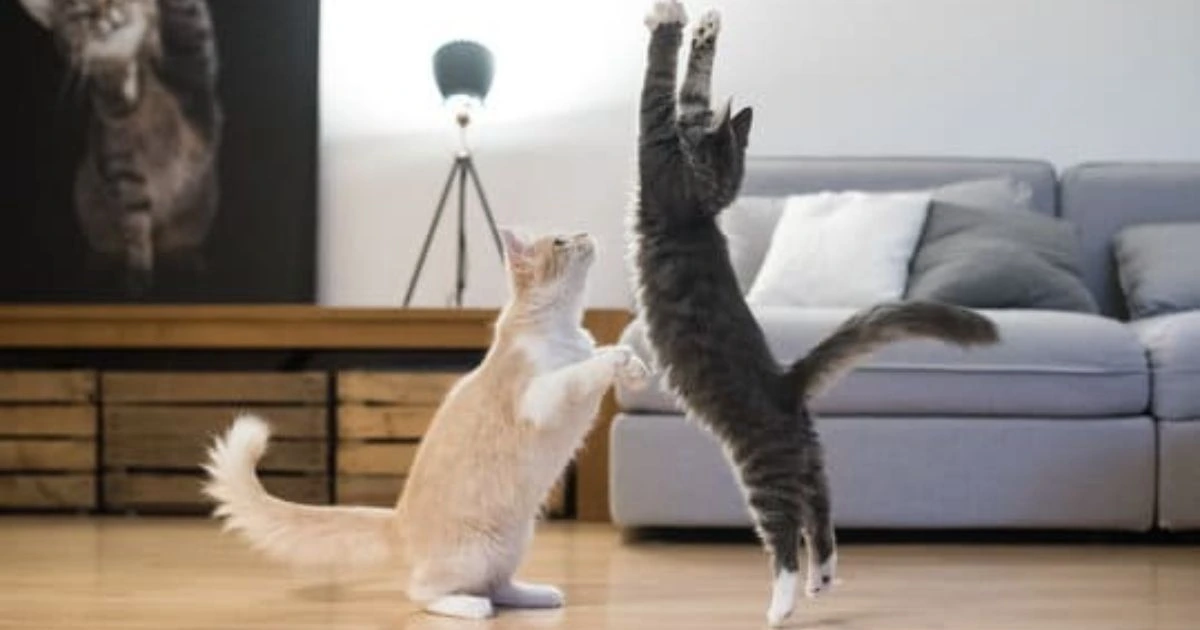
Body language is extremely important when determining how to tell if cats are playing or fighting. Playful cats usually have relatively loose and flexible bodies. Their movements may be exaggerated, bouncy or slightly awkward rather than stiff and defensive.
Their ears may move naturally, their tails may remain relatively relaxed and their fur usually stays flat against their bodies.
A playful cat may also pause during the interaction to look around or groom itself before returning to the game. A relaxed body is one of the strongest signs that the interaction is playful.
They Pause and Then Start Again
Play isn’t usually one continuous attack. Cats may wrestle for several seconds, stare at each other briefly, and then start playing again. These pauses allow both cats to reset before continuing.
If two cats repeatedly stop, relax, and voluntarily return to each other, their interaction is more likely to be played.
In contrast cats involved in a serious fight often remain highly tense and focused on the other cat.
Their Bites Are Controlled
Cats naturally use their mouths during play. They may gently bite a leg, neck, or shoulder without causing injury. Play biting is usually controlled and the other cat often responds by continuing the game rather than desperately trying to escape.
You may also notice that cats release each other quickly instead of holding on aggressively. However, if you see blood, puncture wounds, or one cat screaming in pain, stop the interaction and separate the cats safely.
5. There Is Little or No Hissing
Some cats make unusual noises while playing including brief chirps, squeaks or excited vocalizations.
However, repeated hissing, growling or screaming is more concerning. A completely silent interaction isn’t automatically playful either so sound should always be considered alongside body language.
If both cats remain relaxed and continue voluntarily interacting, the absence of aggressive vocalizations is generally reassuring.
Signs of fighting
Their Fur Is Standing Up
Raised fur is a major warning sign. When a cat feels threatened or extremely aroused its fur may stand up along the body and tail. This makes the cat appear larger and can be part of a defensive response.
A puffed-up tail combined with flattened ears, hissing and a stiff posture strongly suggests that the interaction isn’t friendly play.
If you see these signs, don’t assume the cats will resolve the situation themselves.
One Cat Is Trying to Escape
This is one of the most important clues when learning how to tell if cats are playing or fighting.
If one cat repeatedly hides, runs away, crouches in a corner, or tries to climb somewhere to escape while the other cat continues pursuing it, the interaction may have become aggressive. Healthy play should be voluntary.
If one cat clearly wants to leave and the other refuses to stop, intervention may be necessary.
They Show Aggressive Body Language
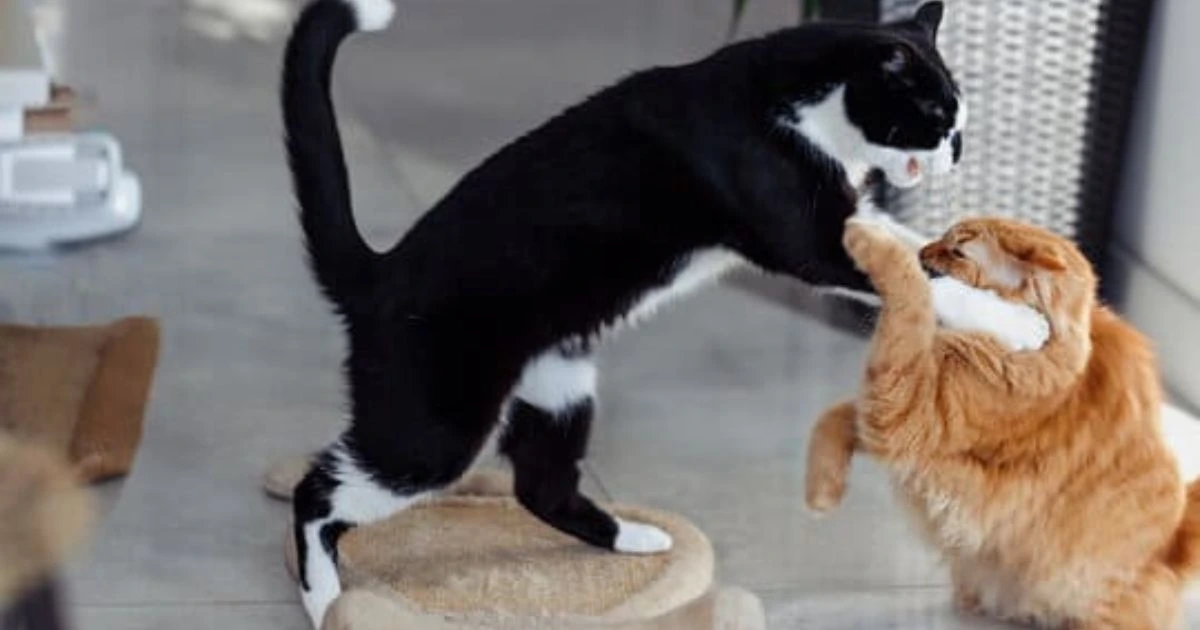
Fighting cats often become stiff and highly focused on each other.
Warning signs include
- Flattened ears
- Wide pupils
- Stiff posture
- Puffed fur
- Arched back
- Rapid tail movements
- Hissing
- Growling
- Screeching
The more of these signs you observe together, the more likely it is that you’re seeing genuine aggression rather than normal play.
The Interaction Becomes Violent
Real fights can become extremely intense very quickly.
Cats may strike repeatedly with their front paws, bite forcefully, scream loudly and attempt to injure each other. Unlike playful wrestling there may be no pauses or role switching.
If the cats are locked together or one is clearly being attacked, do not put your hands between them.
Use a safe barrier or another appropriate method to separate them without putting yourself at risk.
How to Tell If Cats Are Playing or Fighting by Their Sounds
Sounds can provide another useful clue when you’re learning how to tell if cats are playing or fighting. Cats can make noises during both play and conflict, so a single sound isn’t enough to determine what is happening.
During playful interactions, you may hear short chirps, squeaks, or occasional brief meows. The cats may also remain relatively quiet while chasing and wrestling. Fighting tends to sound much more intense. Repeated hissing, deep growling, yowling or loud screaming usually indicates that at least one cat is frightened, angry or feeling threatened.
Pay attention to the combination of sound and body language. A little vocalization during relaxed wrestling isn’t necessarily a problem but loud, repeated warning sounds combined with flattened ears and puffed fur are strong reasons to separate the cats.
The Biggest Difference Between Playing and Fighting
The easiest way to understand how to tell if cats are playing or fighting is to ask one simple question
Do both cats appear willing to continue the interaction?
During healthy play both cats generally have opportunities to chase, wrestle and escape. They may switch roles, pause and return to the interaction voluntarily.
During a fight, one cat may repeatedly attempt to escape while the other continues attacking. The frightened cat may hide, hiss, scream or become defensive.
Another important difference is body language. Play usually involves relaxed movements, while aggression is associated with tension, defensive postures, raised fur, and threatening sounds.
If you’re still unsure, it’s safer to interrupt the interaction rather than assume the cats are playing.
What Should You Do If Cats Start Fighting?
If you’ve determined that the cats are actually fighting your first priority should be safety.
Don’t grab either cat with your bare hands. Frightened or aggressive cats can bite and scratch even people they normally trust.
Instead try to create distance using a safe barrier such as a large piece of cardboard, cushion, or another solid object that allows you to separate the cats without touching them directly.
Once they are separated, place them in different areas and give them time to calm down.
Don’t immediately put them back together. Cats can remain highly aroused after a confrontation and another fight may happen if they’re reunited too quickly.
What You Should Never Do
When learning how to tell if cats are playing or fighting, it’s equally important to know how not to respond.
Avoid
- Putting your hands between fighting cats
- Hitting or physically punishing either cat
- Shouting directly at an aggressive cat
- Forcing the cats to stay together
- Picking up an extremely frightened cat
- Immediately returning them to the same room
Punishment can increase fear and stress, potentially making future aggression worse Instead, focus on safely separating the cats and identifying what triggered the conflict
How to Prevent Cats From Fighting Again
Once the cats are calm, think about what may have caused the conflict.
Common triggers include competition over resources, unfamiliar cats entering the home, territorial disputes, stress or sudden environmental changes.
You can reduce tension by giving each cat access to its own resources.
Consider providing
- Separate food and water areas
- Multiple litter boxes
- Individual sleeping spaces
- Several scratching posts
- Hiding places
- Vertical climbing areas
- Separate play sessions
Giving cats opportunities to retreat and have their own space can reduce competition and help them feel more secure.
If two cats repeatedly fight, don’t rely on them to work it out. A gradual reintroduction process may be necessary.
What If Cats Fight After Playing?
Sometimes an interaction can begin as play and then become too intense. Excitement can increase quickly, particularly when young cats are chasing and wrestling. One cat may become overstimulated and the interaction can turn into genuine aggression.
This is why observing the cats throughout the entire interaction matters.
If the play becomes louder, more physical, or one cat starts showing defensive body language, interrupt the interaction before it escalates.
Learning how to tell if cats are playing or fighting isn’t about identifying one specific behavior. It’s about noticing when the overall body language changes.
When Should You Contact a Veterinarian?
A fight can result in injuries that aren’t immediately obvious. Cat bites can create small puncture wounds that may become infected even when the injury appears minor. If your cat has been bitten, scratched badly, is limping, appears painful or develops swelling, contact a veterinarian.
You should also consider professional help if
- Fighting happens repeatedly
- Aggression suddenly appears in a normally peaceful cat
- One cat constantly hides from another
- Your cat stops eating after a conflict
- A cat becomes unusually fearful or aggressive
- You suspect an underlying medical problem
Pain and illness can sometimes contribute to sudden aggression so unexpected behavioral changes shouldn’t automatically be treated as a training problem.
Conclusion
Knowing how to tell if cats are playing or fighting can help you protect your cats while allowing them to enjoy healthy social interaction. Chasing, wrestling, pouncing, and gentle biting can all be normal parts of play when both cats remain relaxed, take turns, pause and willingly return to the interaction. Remember that every cat has a different personality and tolerance for interaction. By paying attention to body language instead of focusing on a single sound or action, you’ll become much better at understanding what your cats are communicating.
Real fighting looks different. Stiff bodies, flattened ears, raised fur, repeated hissing or growling, loud screaming and attempts to escape are important warning signs. When these behaviors appear, it’s safer to separate the cats rather than allow the conflict to continue. If fighting happens repeatedly or your cat is injured, frightened, or suddenly becomes aggressive, seek advice from a veterinarian or qualified feline behavior professional.
FAQ’s
How to tell if cats are playing or fighting?
Look at their body language, sounds, and whether both cats willingly participate. Play usually involves relaxed movements, role switching, pauses, and voluntary interaction. Fighting is more likely to involve stiff bodies, flattened ears, raised fur, hissing, growling, screaming, and attempts to escape.
Is chasing normal between cats?
Yes. Chasing can be a normal part of play particularly when both cats take turns chasing each other. If one cat is always running away and trying to hide however, the interaction may not be friendly.
Is wrestling between cats normal?
Yes. Cats often wrestle during play. Gentle biting and batting can also occur. The important thing is whether both cats remain relaxed and voluntarily continue the interaction.
Should I let my cats fight it out?
No. If cats are genuinely fighting, don’t assume they will resolve the conflict themselves. Separate them safely without putting your hands between them then give them time to calm down.
Why do cats suddenly fight after getting along?
Cats may fight because of territorial changes, redirected aggression, resource competition, stress, unfamiliar scents, or changes in their environment. A medical problem can also contribute to sudden aggression.
Can cats play too roughly?
Yes. Play can become too intense and may turn into aggression. Watch for changes such as hissing, growling, flattened ears, puffed fur, or one cat attempting to escape.