
Long hair cat grooming is one of the most important parts of caring for breeds like Persians, Maine Coons, Ragdolls, and Norwegian Forest Cats, since their thick, flowing coats need far more attention than short haired cats to stay healthy and comfortable. Without a regular grooming routine, loose fur quickly turns into painful mats and tangles, especially around the belly, armpits, and behind the ears, which can trap dirt, moisture, and even parasites close to the skin.
A proper long hair cat grooming routine goes beyond simply keeping your cat looking beautiful, since it directly supports skin health, reduces hairballs, prevents overheating, and gives you an early chance to notice lumps, parasites, or skin irritation before they become serious problems. Many new owners underestimate just how much daily and weekly care a long haired coat actually needs, and this often leads to frustrating mats that require a trip to the groomer or, in severe cases, a full shave down. In this complete guide, you will learn exactly how to groom a long haired cat step by step, which tools actually work, how often each task should be done, and simple habits that keep your cat’s coat soft, shiny, and completely tangle free all year round.
Why Long Hair Cat Grooming Is So Important
Long haired cats did not evolve to manage their coats entirely on their own, and even the most diligent self groomers cannot keep up with the volume of fur they produce, especially during seasonal shedding periods in spring and fall. When loose undercoat fur is left in place, it naturally begins to twist together with the topcoat, forming dense mats that pull painfully on the skin and restrict normal movement. Beyond the physical discomfort, these mats create a warm, moist environment where bacteria, yeast, and skin parasites can thrive undetected beneath the surface.
Regular grooming also plays a major role in reducing hairball formation, since brushing removes the loose fur before your cat can swallow it during self grooming sessions. Cats that are groomed consistently tend to have healthier skin, better circulation, and a noticeably shinier coat, because brushing distributes natural skin oils evenly from root to tip. For senior cats or those with mobility issues, grooming becomes even more essential, since arthritis and stiffness often make it physically difficult for them to reach certain areas of their own body.
Signs Your Long Haired Cat Needs More Grooming Attention
Every long haired cat has slightly different grooming needs depending on coat density, activity level, and overall health, but certain signs clearly indicate it is time to increase your grooming routine. Small tangles that feel like tiny knots under your fingers are the earliest warning sign, and these are far easier to work out than fully formed mats. You may also notice visible clumps of loose fur scattered around your home, which usually means your cat is shedding faster than their current grooming schedule can manage.
A duller, greasier looking coat is another common indicator, since a healthy, well brushed coat should appear glossy rather than flat or oily. If you notice your cat licking or biting at a particular area repeatedly, gently check that spot for hidden mats, since matted fur close to the skin often causes localized irritation that cats try to relieve on their own. Ignoring these early signs almost always leads to more difficult, time consuming grooming sessions later on.
Essential Tools for Long Hair Cat Grooming
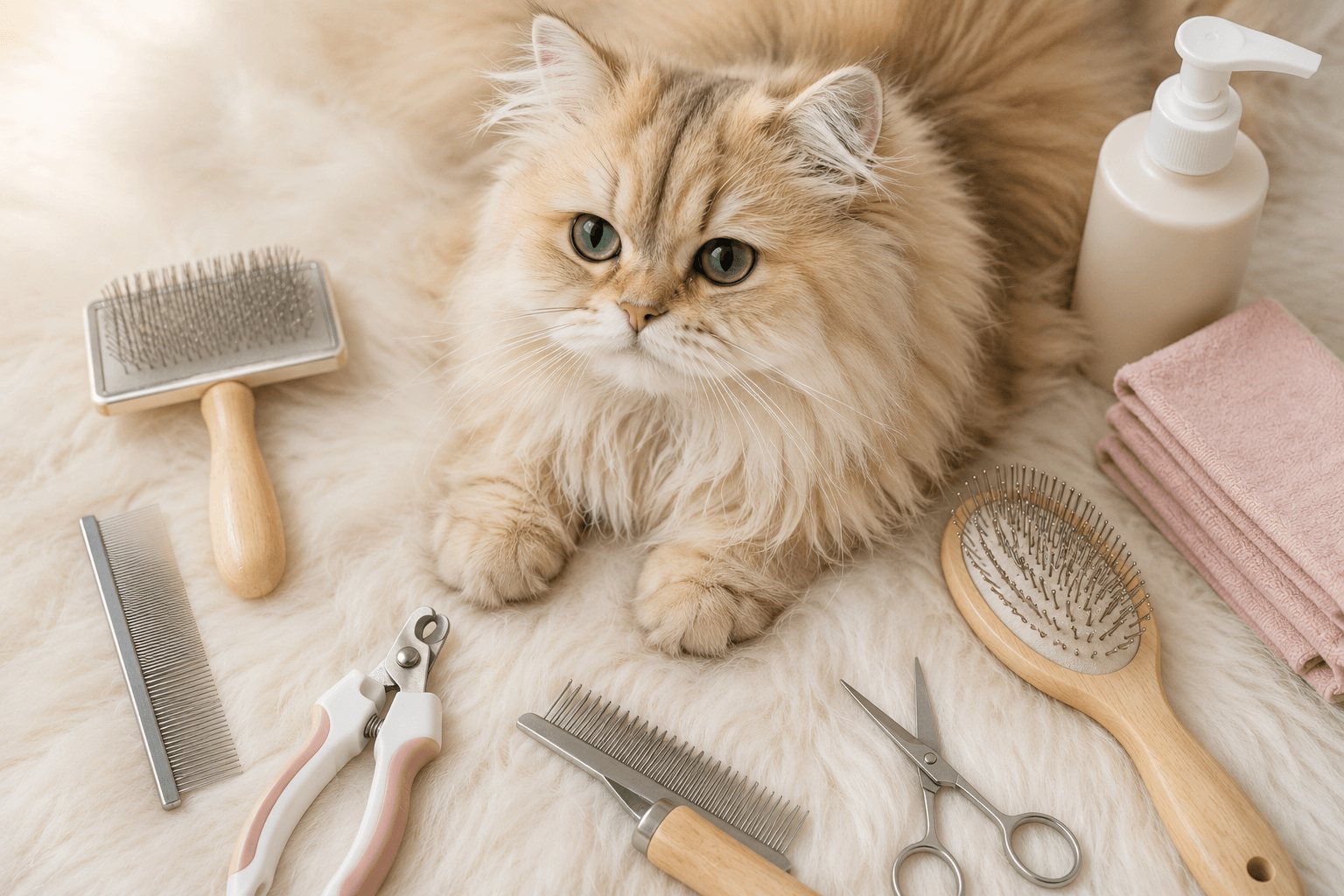
Using the right tools makes long hair cat grooming significantly easier, faster, and far more comfortable for your cat. Investing in quality grooming tools upfront actually saves time and prevents the kind of painful, forceful detangling that damages trust between you and your cat.
- A wide toothed comb for gently working through tangles without pulling on the skin
- A slicker brush to remove loose undercoat and prevent new mats from forming
- A dematting tool or mat splitter for safely handling existing tangles
- Grooming scissors with rounded tips for trimming stubborn mats close to the skin
- Cat safe grooming wipes or a gentle feline shampoo for occasional bathing
- Nail clippers designed specifically for cats, since overgrown nails can scratch delicate fur while your cat grooms itself
Avoid using human hairbrushes or tools designed for dogs, since these often have bristles that are too harsh or too far apart for a cat’s finer, denser undercoat. Always introduce new tools slowly, letting your cat sniff and inspect them before you begin , so the experience feels safe rather
How to Groom a Long Haired Cat Step by Step
Following a consistent, gentle routine is the foundation of successful long hair cat grooming, and most cats gradually come to enjoy the process once it becomes a predictable part of their day. We can also use grooming products.
Step 1: Start With a Calm, Quiet Session
Choose a time when your cat is naturally relaxed, such as after a meal or during a quiet afternoon nap window. Sit somewhere comfortable and speak in a soft, reassuring tone throughout the session to keep your cat calm.
Step 2: Begin With the Comb
Work through the coat section by section using a wide toothed comb, starting at the legs and working upward toward the body. This helps you feel for small tangles before they tighten into full mats, and it is generally gentler than starting with a brush on a knotted coat.
Step 3: Follow With a Slicker Brush
Once the comb moves through smoothly, switch to a slicker brush to remove loose undercoat fur and add extra shine. Use short, gentle strokes in the direction of hair growth, paying special attention to high shedding areas like the flanks and tail base.
Step 4: Check and Handle Problem Areas
Gently inspect the belly, armpits, behind the ears, and around the collar area, since these spots are especially prone to matting due to friction and lower air circulation. If you find a mat, hold the base of the fur close to the skin to avoid pulling, and work it apart slowly using a dematting tool or your fingers before combing through.
Step 5: Trim Only If Absolutely Necessary
For mats that will not separate safely, use blunt tipped grooming scissors to carefully trim them out rather than risking injury by pulling or cutting too close to the skin. When in doubt about a stubborn mat, a professional groomer or veterinarian can safely remove it without stress to your cat.
Step 6: Finish With Praise and a Reward
End every grooming session on a positive note with a treat, gentle petting, or a favorite toy. This builds a strong positive association that makes future long hair cat grooming sessions noticeably easier over time.
How Often Should You Groom a Long Haired Cat
Most long haired cats benefit from brushing at least every other day, while heavily shedding breeds like Maine Coons or Persians often do best with daily attention during peak shedding seasons in spring and fall. A quick daily check, even just a few minutes running a comb through high friction areas, prevents small tangles from ever becoming serious mats. Bathing is typically only needed every four to six weeks, or as recommended by your veterinarian, since over bathing can strip natural oils and actually make the coat more prone to tangling. Senior cats and cats recovering from illness or surgery often need more frequent grooming support, since reduced mobility limits their ability to groom themselves effectively.
Diet and Skin Health for a Shinier Coat
A cat’s coat quality is directly connected to their overall nutrition, and long hair cat grooming becomes noticeably easier when your cat is eating a balanced, high quality diet. Diets rich in omega three and omega six fatty acids support healthy skin and reduce excess shedding, while adequate hydration helps prevent the dry, brittle fur that tangles more easily. Cats on a poor quality diet often develop dull, greasy, or flaky coats that mat far more quickly than a well nourished coat would.
If you notice persistent dandruff, excessive shedding, or a consistently dull coat despite regular grooming, it is worth discussing your cat’s diet with a veterinarian, since underlying health issues such as thyroid imbalances or food allergies can also affect coat quality. Regular grooming combined with proper nutrition creates a noticeable improvement in coat texture, shine, and overall skin health within just a few weeks.
Common Long Hair Cat Grooming Mistakes to Avoid
Many well meaning cat owners make mistakes that unintentionally make grooming harder or more stressful over time. Brushing too roughly or too quickly through tangled fur is one of the most common errors, since forceful pulling causes pain and teaches your cat to associate grooming with discomfort. Skipping regular sessions and only grooming when mats are already severe is another frequent mistake, since this turns a quick daily task into a lengthy, uncomfortable ordeal.
Using the wrong tools, such as human brushes or overly harsh dematting blades, can also damage the coat and irritate sensitive skin. Bathing too frequently strips essential oils and can actually increase tangling, while never bathing at all allows dirt and oil to build up and worsen matting. Consistency, patience, and the right tools together make long hair cat grooming a smooth, low stress routine rather than an occasional battle.
When to See a Professional Groomer or Veterinarian
While most long hair cat grooming can be managed comfortably at home, certain situations call for professional help. Severe, widespread matting that covers large areas of the body is often safer to remove under professional care, since attempting to cut out extensive mats at home risks accidentally injuring the skin. If your cat becomes highly aggressive or distressed during grooming despite a gentle approach, a professional groomer experienced with anxious cats can often complete the job more safely and efficiently.
You should also contact your veterinarian if you notice redness, sores, unusual odor, or signs of infection underneath a mat once it has been removed, since matted fur can sometimes hide skin problems that need medical treatment. Persistent excessive shedding, bald patches, or a sudden change in coat texture are additional signs that deserve a veterinary check rather than home grooming alone.
Tips for Making Grooming Sessions Stress Free
- Start grooming your cat gently from kittenhood whenever possible, so regular handling feels normal and comfortable from an early age.
- Keep early sessions short, just a few minutes at a time, gradually increasing duration as your cat becomes more comfortable.
- Always brush in the direction of hair growth and avoid pulling on tangled sections, since gentle technique builds long term trust.
- Use treats, calm praise, or a favorite toy throughout the session to create a consistently positive association with grooming.
- Watch your cat’s body language closely, and pause or stop if they show clear signs of stress such as flattened ears or a swishing tail.
- Consider grooming during two shorter sessions rather than one long session, especially for cats with dense or heavily matted coats.
Conclusion
Consistent long hair cat grooming is essential for keeping your cat comfortable, healthy, and free from painful mats and tangles. With the right tools, a gentle step by step routine, and an appropriate grooming schedule, most long haired cats can be managed easily at home without stress for you or your cat. Paying attention to diet, watching for early warning signs, and knowing when to seek professional help all work together to keep your cat’s coat soft, shiny, and tangle free throughout every season.
Every long haired cat has slightly different grooming needs based on their breed, coat density, and overall health, so it helps to stay flexible and adjust your routine as those needs change over time. By making grooming a regular, positive part of your bond rather than an occasional chore, you will keep your cat looking and feeling their best for years to come.
Frequently Asked Questions (FAQs)
Q1: How often should I brush a long haired cat?
Most long haired cats need brushing at least every other day, while heavy shedders like Maine Coons or Persians often benefit from daily brushing, especially during spring and fall shedding seasons.
Q2: What is the best tool for long hair cat grooming?
A combination of a wide toothed comb for detangling and a slicker brush for removing loose undercoat generally works best, along with a dematting tool for occasional stubborn tangles.
Q3: How do I remove mats without hurting my cat?
Always hold the fur close to the skin to reduce pulling, work mats apart slowly with a dematting tool or your fingers, and use blunt tipped scissors only as a last resort for mats that will not separate safely.
Q4: How often should I bathe a long haired cat?
Most long haired cats only need bathing every four to six weeks, since bathing too often can strip natural oils and actually make the coat more prone to tangling.
Q5: Can diet affect how easily my cat’s coat mats?
Yes, a diet rich in omega fatty acids and proper hydration supports healthier, less brittle fur that tangles less easily, while poor nutrition often leads to dull, greasy, or flaky coats that mat more quickly.