
Learning how to bathe a cat the right way can feel intimidating, especially if your cat hates water and turns bath time into a battle. But knowing how to bathe a cat safely and calmly is an essential grooming skill every cat owner should have, because there are times sticky messes, skin conditions, flea treatments, or a cat too sick or overweight to self-groom when a bath simply cannot be avoided. In this guide, you’ll learn exactly how to bathe a cat step by step, using vet-informed, easy-to-follow instructions designed to keep both you and your cat calm, safe, and stress-free from start to finish.
Most cats are naturally excellent self groomers and rarely need full baths. However, understanding how to bathe a cat correctly with the right supplies, water temperature, technique, and post-bath drying routine can mean the difference between a quick, low-stress experience and a scratched-up, traumatic one for both of you. Whether you’re bathing a kitten for the first time or an adult cat who has never seen a tub, this article covers everything you need to know.
Why You Might Need to Know How to Bathe a Cat
Cats groom themselves for hours every day using their rough tongues, so full baths are usually unnecessary. Still, there are specific situations where knowing how to bathe a cat properly becomes important:
Your cat got into something sticky, greasy, or toxic – Paint, oil, chemicals, or sticky substances can’t always be removed by licking, and licking toxic substances can be dangerous.
Skin conditions or parasites – Vets often recommend a medicated bath for fleas, ringworm, dandruff, or other skin issues.
Obesity or mobility problems – Overweight or senior cats often can’t reach certain areas of their body to groom properly.
Long-haired breeds with severe odor or oily coat – Persians and Maine Coons sometimes need occasional baths to keep their coats manageable.
Post-surgery or medical recovery – Vets may recommend gentle bathing during recovery from certain conditions.
Understanding how to bathe a cat in these situations helps you respond calmly instead of panicking, and it keeps your cat’s skin and coat healthy.
How Often Should You Bathe a Cat?
One of the most common questions alongside how to bathe a cat is how frequently it should be done. For most healthy cats, bathing once every four to six weeks or only when truly necessary is more than enough. Over-bathing can strip natural oils from the skin, leading to dryness, irritation, and a dull coat. Short-haired cats rarely need baths at all, while long-haired breeds, hairless breeds like the Sphynx, and senior or overweight cats may need more frequent bathing to stay clean and healthy.
Supplies You Need Before Bathing a Cat
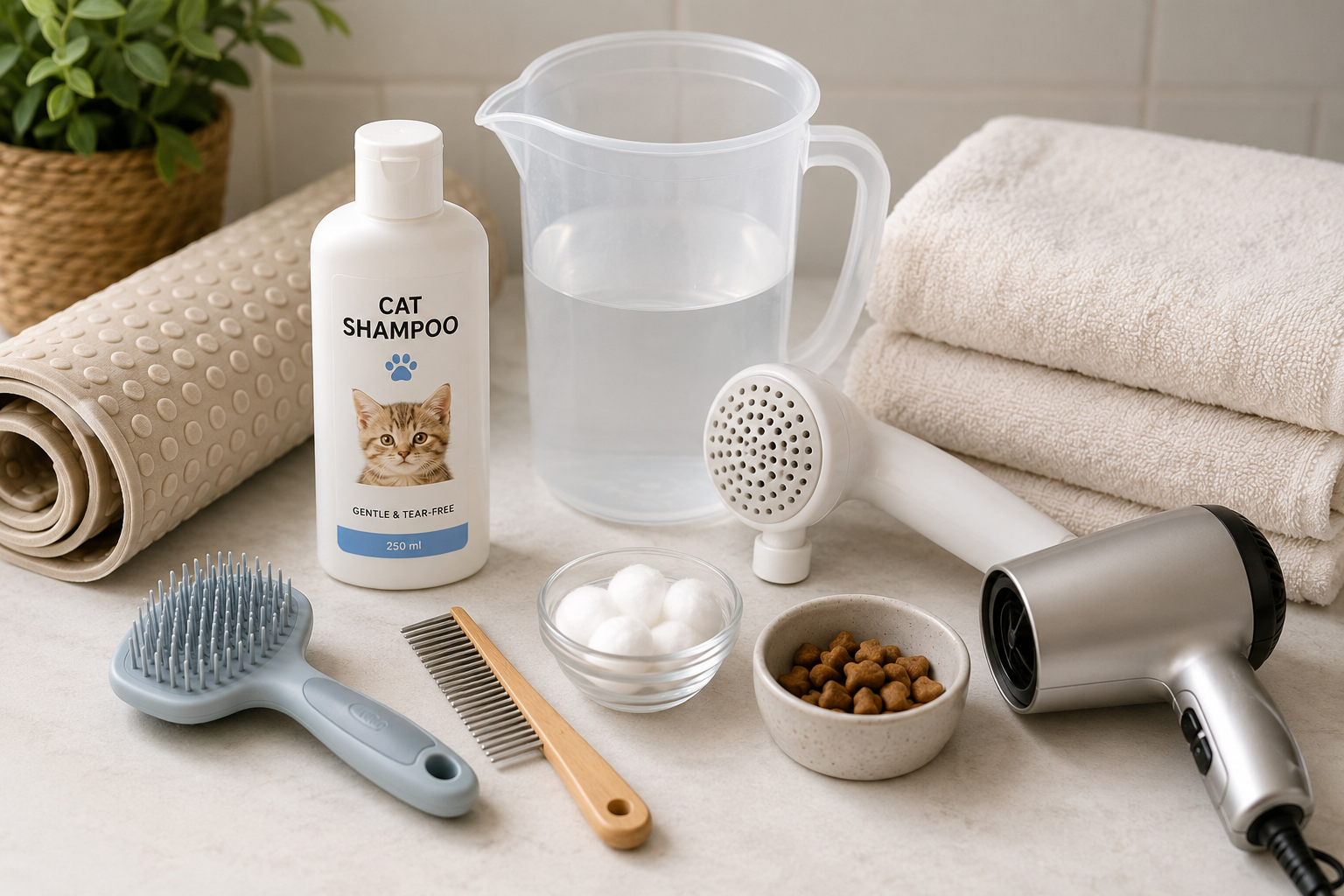
Cat grooming products use before you learn how to bathe a cat hands on, gather every supply in advance so you’re not scrambling mid bath with a wet, unhappy cat:
- Cat-specific shampoo (never human shampoo, dish soap, or baby shampoo)
- A non-slip mat for the sink or tub
- A large pitcher or handheld sprayer for rinsing
- Two to three soft, absorbent towels
- A rubber grooming brush or comb
- Cotton balls to gently place near the ear openings
- Treats for positive reinforcement
- A pet-safe hair dryer on the lowest heat setting (optional)
Preparing everything beforehand is one of the most overlooked steps in how to bathe a cat successfully, since a calm, efficient process reduces stress for your cat significantly.
How to Bathe a Cat: Step-by-Step Instructions
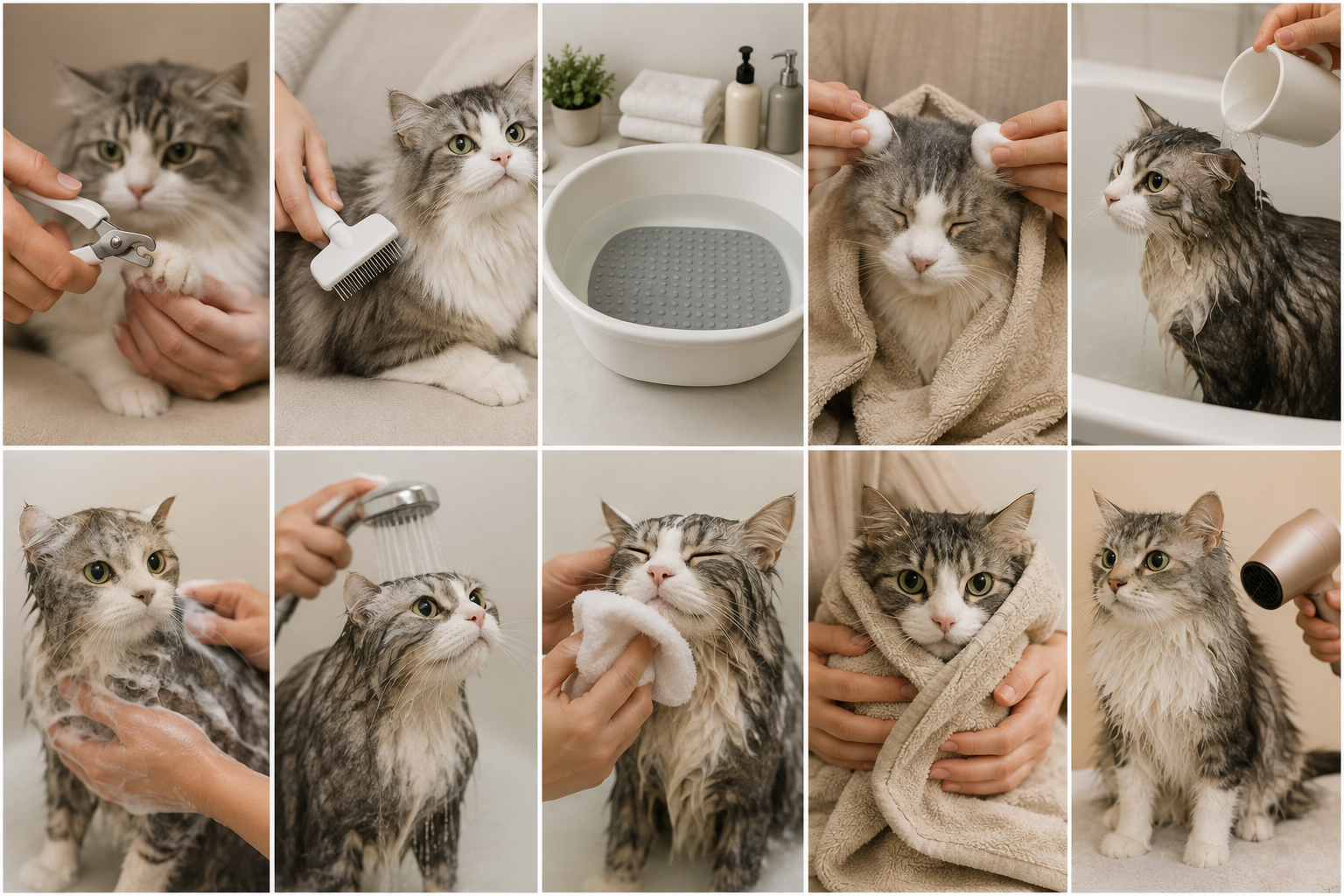
Step 1: Trim Nails Before the Bath
Before you even think about how to bathe a cat, trim its nails. A startled, wet cat with sharp claws can cause real injury. Trimming nails a day or two before bath time reduces scratching risk considerably.
Step 2: Brush the Coat Thoroughly
Brushing before bathing removes loose fur, tangles, and mats. Wet, matted fur is much harder to manage, so this step is a core part of doing how to bathe a cat correctly, especially for long haired breeds.
Step 3: Prepare the Bathing Area
Choose a sink, basin, or shallow tub and place a non-slip mat at the bottom cats feel far more secure with solid footing under their paws. Fill the basin with two to three inches of lukewarm water before bringing your cat into the room, since the sound of running water can trigger anxiety.
Step 4: Protect the Ears
Gently place a small cotton ball just inside each ear opening to prevent water from entering the ear canal. This small step in how to bathe a cat helps prevent ear infections and discomfort.
Step 5: Wet the Coat Gently
Using a cup, pitcher, or handheld sprayer on the lowest setting, slowly wet your cat’s body starting from the neck downward. Avoid pouring water directly on the face and head. Keep the water lukewarm never hot or cold since temperature sensitivity is a major factor in how to bathe a cat without causing distress.
Step 6: Apply Cat-Safe Shampoo
Dilute a cat-specific shampoo according to the label instructions and massage it gently into the coat, avoiding the eyes, ears, nose, and mouth. Work from the neck toward the tail, and give extra attention to areas prone to oil buildup, such as the base of the tail.
Step 7: Rinse Thoroughly
Rinsing is arguably the most important part of how to bathe a cat safely, because leftover shampoo residue can irritate the skin and cause itching. Rinse until the water runs completely clear, using slow, gentle pours.
Step 8: Clean the Face Separately
Never dunk your cat’s head in water. Instead, use a damp washcloth with no shampoo to gently wipe the face, being careful around the eyes and ears.
Step 9: Towel Dry Immediately
Wrap your cat in a large, absorbent towel right after the bath and gently press out excess water rather than rubbing, which can cause tangling in long-haired cats. This step is essential in how to bathe a cat because wet cats lose body heat quickly and can become chilled.
Step 10: Finish Drying in a Warm, Draft-Free Room
Keep your cat in a warm room until fully dry, using additional towels as needed. If your cat tolerates it, a pet-safe hair dryer on the lowest, coolest setting held at a distance can speed up drying but many cats find this frightening, so towel drying alone is often the safer, calmer option.
How to Bathe a Cat That Hates Water
Many owners searching how to bathe a cat are really asking how to bathe a cat who is terrified of water. Here are proven techniques to reduce stress:
Trim nails and brush thoroughly beforehand so the actual bath time is as short as possible.
Use a second person to gently hold and reassure your cat while you handle the washing.
Keep sessions short and calm, moving quickly but gently rather than rushing in a panicked way.
Speak in a soft, soothing voice throughout the entire process to help your cat stay as relaxed as possible.
Offer treats before, during, and after the bath to build a positive association over time.
Never scold or raise your voice, since fear-based reactions make future baths even harder.
If your cat becomes extremely aggressive or panicked despite these techniques, it’s completely reasonable to stop and consult a professional groomer or veterinarian instead of forcing the process.
Common Mistakes to Avoid When Bathing a Cat
Even with the best intentions, many owners make mistakes while figuring out how to bathe a cat properly:
Using human shampoo – This disrupts a cat’s skin pH balance and can cause dryness or irritation.
Using water that’s too hot or too cold – Always test the water temperature on your wrist first; lukewarm is ideal.
Skipping the rinse step – Leftover shampoo residue is a leading cause of post-bath itching and skin irritation.
Pouring water directly on the face – This is one of the biggest triggers of panic during a cat bath.
Letting your cat air-dry in a cold room – Wet fur combined with cold air can lead to chills, especially in kittens and senior cats.
Bathing too frequently – Over-bathing strips natural oils and can actually worsen coat and skin health over time.
Avoiding these mistakes is just as important as knowing the correct how to bathe a cat technique itself, since even a perfectly executed bath can go wrong if these basics are ignored.
What Experts Recommend for a Healthy Bathing Routine
Veterinarians and professional groomers generally agree that most cats don’t need routine baths, and that learning how to bathe a cat is more about knowing when it’s necessary than doing it on a fixed schedule. A well-planned, gentle bathing routine paired with regular brushing, proper nutrition, and routine veterinary checkups supports healthy skin, a shiny coat, and early detection of parasites, wounds, or skin conditions. If your cat has ongoing skin issues, unexplained hair loss, or extreme water aversion, it’s always best to consult your veterinarian before continuing to bathe your cat at home.
How to Bathe a Kitten Safely
If you’re wondering how to bathe a cat that’s still a kitten, the process needs extra caution. Kittens under eight weeks old should generally not be fully bathed unless absolutely necessary, since they can’t regulate their body temperature well and are prone to chills. If a bath is unavoidable, use only lukewarm water in a shallow basin, support the kitten’s body fully with one hand at all times, and keep the entire process under two to three minutes. Dry the kitten immediately and completely in a warm room, and never leave a wet kitten unattended. Introducing gentle, positive water experiences early on such as a warm damp cloth wipe down instead of a full bath can also make future baths far less stressful once the kitten grows into an adult cat.
How to Bathe a Cat With Sensitive Skin or Allergies
Some cats have naturally sensitive skin, allergies, or existing dermatological conditions that require special care during bath time. When learning how to bathe a cat with these needs, always choose a hypoallergenic, fragrance-free, veterinarian-recommended shampoo rather than a generic pet shampoo. Avoid scrubbing vigorously, as this can worsen inflammation or irritation. Instead, use slow, gentle massaging motions and rinse for longer than usual to ensure absolutely no shampoo residue remains, since leftover residue is one of the most common triggers of post-bath flare-ups. If your cat has diagnosed allergies, ask your veterinarian which specific medicated shampoo is appropriate, since some conditions require prescription-strength formulas rather than over-the-counter cat shampoo.
How to Bathe a Cat Using the Sink vs. the Bathtub
Owners often debate the best location for bathing, and the answer depends on your cat’s size and temperament. A kitchen or bathroom sink works well for smaller cats and kittens, since the enclosed space can feel more secure and requires less water. A shallow bathtub with a non-slip mat is often better for larger breeds like Maine Coons or Ragdolls, since it provides more room to maneuver without your cat feeling trapped. Whichever space you choose when figuring out how to bathe a cat, make sure the water level stays low just enough to wet the belly and legs since deep water increases anxiety and the risk of your cat trying to climb out and escape.
Alternatives to a Full Bath
If your cat becomes extremely distressed every time you attempt how to bathe a cat the traditional way, there are gentler alternatives worth considering. Waterless cat shampoo, available as a foam or spray, can freshen the coat without the stress of water immersion. Grooming wipes formulated specifically for cats are another low stress option for spot-cleaning dirty areas. For cats with severe anxiety, a professional groomer experienced in handling nervous cats can safely complete the bath using specialized restraint and calming techniques that most owners don’t have access to at home. These alternatives don’t replace a full bath entirely, but they can reduce how often a traditional bath is needed.
Frequently Asked Questions About How to Bathe a Cat
1. How often should I bathe my cat? Most cats only need a bath every four to six weeks or as needed, since over-bathing can dry out their skin and coat.
2. What is the best water temperature for bathing a cat? Lukewarm water is ideal never too hot or too cold since cats are highly sensitive to sudden temperature changes.
3. Can I use regular shampoo to bathe my cat? No. Human or baby shampoo disrupts a cat’s natural skin pH and can cause irritation, so always use a shampoo formulated specifically for cats.
4. How do I bathe a cat that scratches and bites? Trim nails beforehand, keep sessions short, use a second person to help hold and calm your cat, and consider a professional groomer if aggression continues.
5. Do indoor cats need baths? Most indoor cats rarely need baths since they groom themselves effectively, but occasional bathing may still be needed for skin conditions, obesity, or getting into sticky substances.
6. How long should it take to bathe a cat? A well-prepared bath should take no more than five to ten minutes total, since shorter sessions are far less stressful for most cats.
7. Is it safe to use a hair dryer on a cat? Yes, but only on the lowest, coolest setting, held at a safe distance, and only if your cat tolerates the noise without becoming frightened.
Final Thoughts on How to Bathe a Cat
Learning how to bathe a cat doesn’t have to be a stressful, scratch-filled experience for you or your feline companion. By preparing your supplies in advance, using lukewarm water and cat-safe shampoo, working quickly and calmly, and drying your cat thoroughly afterward, you can turn bath time into a manageable and sometimes even bonding experience. Remember that most cats rarely need full baths, so reserve this routine for when it’s truly necessary, and always consult your veterinarian if you’re ever unsure about your cat’s specific bathing needs. With patience, the right technique, and a gentle approach, you’ll master how to bathe a cat safely and confidently every time.