
How to clean a cat’s ears? Cats are naturally clean animals that spend a large part of their day grooming themselves, but their ears still need occasional help from you. Unlike the rest of their body, cats cannot fully reach or clean the inside of their ear canal on their own, which means small amounts of wax, dirt, and debris can slowly build up over time. If you’ve ever noticed a faint odor, brown wax buildup, or your cat shaking its head more than usual, you may already be wondering how to clean a cat’s ears safely at home. Many cat owners feel nervous about this task, worried they might hurt their cat or do something wrong, but the truth is that learning how to clean a cat’s ears the right way isn’t difficult at all
Regular ear care is more than just a grooming habit. It plays an important role in your cat’s overall wellbeing, helping to prevent uncomfortable infections, irritation, and buildup that can otherwise go unnoticed until it becomes a bigger problem. By the end of this article, you’ll feel confident handling ear cleaning at home and know exactly how to keep your cat’s ears healthy, clean, and comfortable for the long run.
Why Cleaning Your Cat’s Ears Matters
Most healthy cats produce a small amount of ear wax naturally, and many cats groom themselves well enough that owners never need to intervene. However, some cats, especially those with allergies, long fur, floppy ear shapes, or a history of ear infections, need regular help to stay healthy. Understanding how to clean a cat’s ears properly helps prevent painful ear infections before they start, removes excess wax and debris, reduces the risk of ear mites, and allows you to catch early signs of illness such as inflammation or unusual odor. Ear hygiene is a small part of overall feline grooming, but it plays a big role in your cat’s long term comfort and hearing health. A cat with clean, healthy ears is generally happier, calmer, and less prone to constant Signs Your Cat’s Ears Need Cleaning
Signs Your Cat’s Ears Need Cleaning
Before you clean your cat’s ears, it helps to recognize when cleaning is actually necessary. Cats don’t need daily ear cleaning, so watch for these signs first.
- Visible wax or debris inside the ear flap
- A mild or unpleasant odor coming from the ear canal
- Frequent head shaking or tilting
- Scratching at the ears more than usual
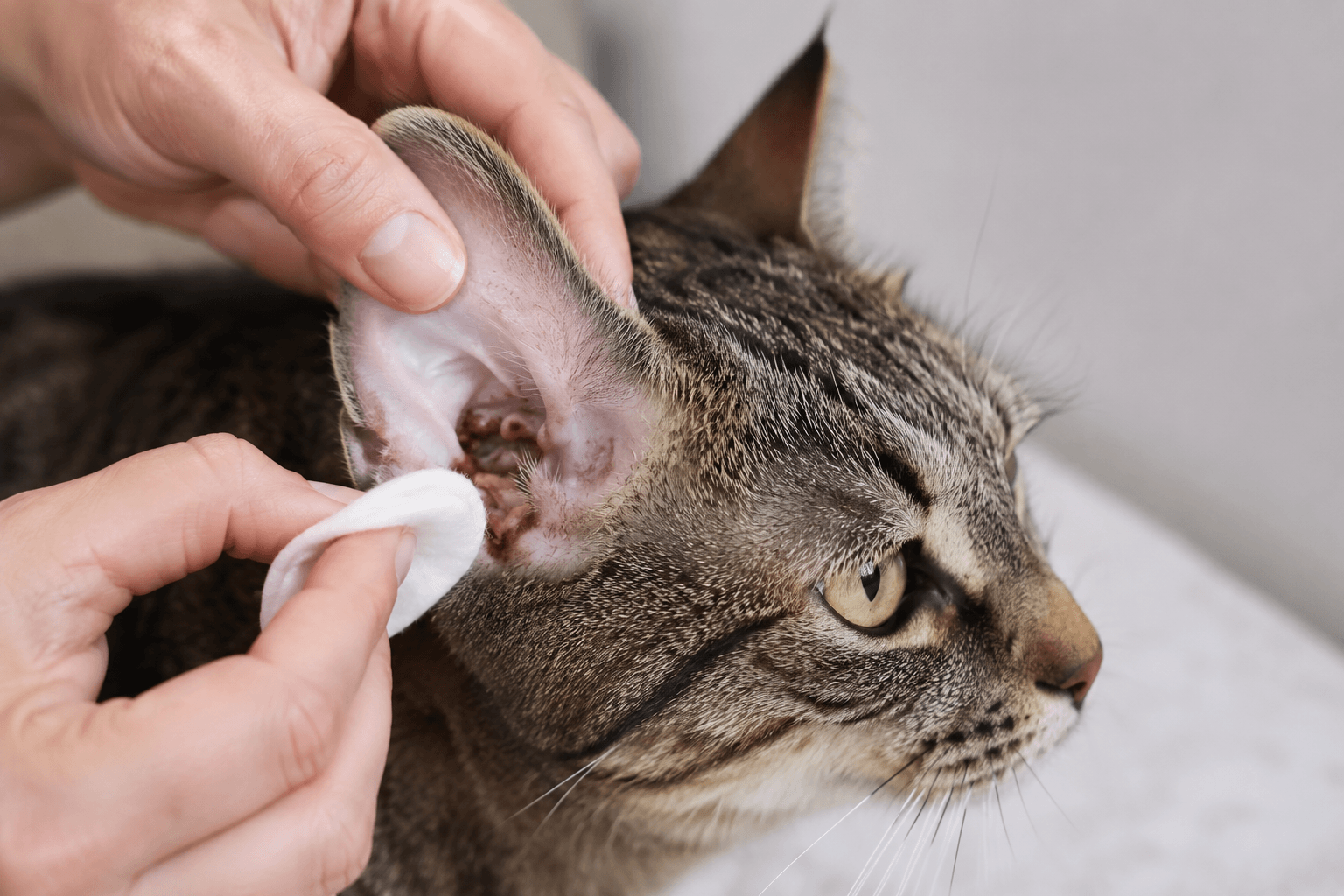
- Dark, coffee ground like residue inside the ear
- Redness or slight swelling around the ear opening
- Your cat rubbing its ears against furniture or the floor
If your cat’s ears look clean, pink, and odor free, they likely don’t need cleaning yet. Cleaning healthy ears too often can actually cause irritation instead of preventing it.
Supplies How to Clean a Cat’s Ears
How to clean a cat’s ears? Having the right supplies ready makes the process faster and less stressful for both you and your cat. Before starting, gather the following items.
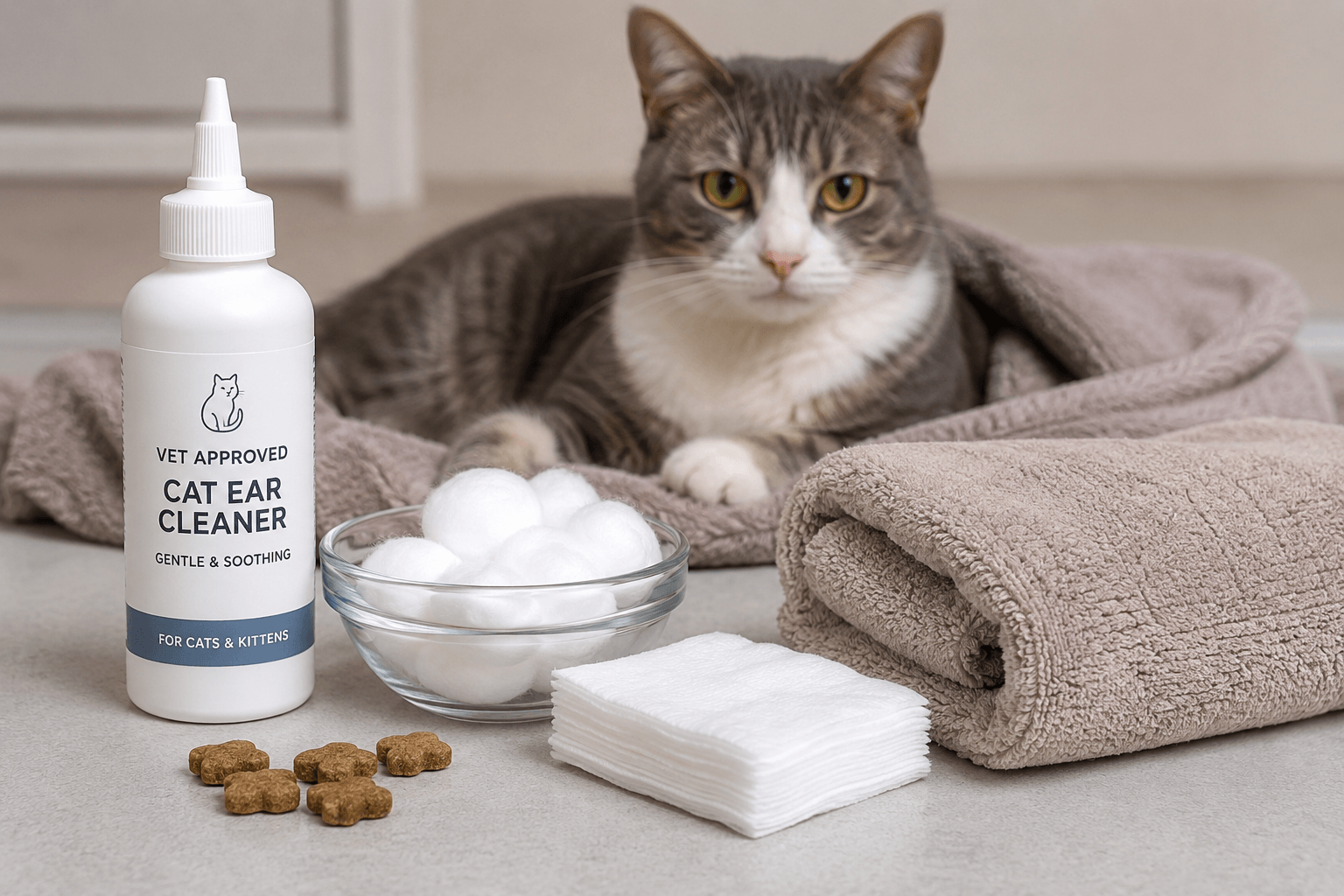
- A vet approved cat ear cleaning solution
- Soft cotton balls or gauze pads (avoid cotton swabs or Q tips)
- A soft towel to gently wrap and comfort your cat
- Small treats for positive reinforcement
- A second person to help hold a wiggly cat, if needed
How to Clean a Cat’s Ears: Step by Step
Here is a simple, vet recommended method for how to clean a cat’s ears at home without causing stress or injury.
1. Choose a Calm Time
Pick a moment when your cat is relaxed, such as after a meal or during a quiet nap window. Trying to clean ears during playtime or high energy moments usually leads to resistance.
2. Gently Restrain Your Cat
Wrap your cat loosely in a towel with just the head exposed, or have someone hold them gently on their lap. This keeps your cat secure without causing fear.
3. Examine the Ear First
Before cleaning, look inside the ear canal. Healthy tissue is usually light pink with minimal wax. If you notice heavy discharge, strong odor, or visible pests, stop and consult a veterinarian instead of cleaning it yourself.
4. Apply the Ear Cleaning Solution
Fill the ear canal gently with a vet approved cleanser according to the product instructions. Avoid inserting the bottle tip too deep into the ear.
5. Massage the Base of the Ear
Gently massage the base of the ear for about ten to twenty seconds. You should hear a soft squishing sound, which means the solution is loosening wax and debris inside the canal.
6. Let Your Cat Shake
Step back and allow your cat to shake its head. This naturally brings loosened debris up toward the outer ear, making it easier to wipe away.
7. Wipe Away Debris
Using a cotton ball or gauze pad, gently wipe the visible parts of the ear flap and outer canal. Never insert cotton swabs deep into the ear, as this can push debris further in or damage the eardrum.
8. Reward Your Cat
Finish with a treat, gentle praise, or a favorite toy. This helps your cat build a positive association with future ear cleaning sessions.
9. Repeat on the Other Ear
Follow the same steps for the second ear, using a fresh cotton ball to avoid spreading debris or bacteria between ears.
Conclusion
Understanding how to clean a cat’s ears gives you a simple, effective way to protect your cat’s comfort and long term health. With the right supplies, a calm approach, and a gentle technique, ear cleaning can become a stress free part of your regular grooming routine rather than a dreaded task. Always clean only when necessary, avoid harsh products or cotton swabs, and pay attention to warning signs like odor, discharge, or excessive scratching. If your cat’s ears show signs of infection or severe discomfort, a quick visit to the veterinarian ensures the problem is treated properly and your cat stays happy and healthy. when we bath our cats we need to clean their ears.
FAQ’s
How to clean a cat’s ears at home safely?
Use a vet approved ear cleaning solution, gently massage the base of the ear, let your cat shake its head, and wipe visible debris with a cotton ball. Avoid cotton swabs and never insert anything deep into the canal.
How often should I clean my cat’s ears?
Most healthy cats only need ear cleaning every four to six weeks, though cats prone to allergies or wax buildup may need it more often based on veterinary advice.
Can I use a cotton swab to clean my cat’s ears?
No. Cotton swabs can push debris deeper into the ear canal or injure the eardrum. Stick to cotton balls or gauze pads for the visible outer ear.
What can I use instead of a commercial cat ear cleaner?
It is best to use a vet approved solution made specifically for cats. Household products like alcohol, vinegar, or hydrogen peroxide can irritate sensitive ear tissue.
How do I know if my cat has ear mites instead of normal wax?
Ear mites usually appear as dark, coffee ground like debris and come with intense scratching or head shaking, while normal wax is lighter in color and less irritating.
Is it normal for my cat to resist ear cleaning?
Yes, many cats dislike having their ears touched. Going slowly, using treats, and stopping if your cat becomes too stressed can make the process easier over time.