
Learning how to brush a cat’s teeth is one of the most important parts of keeping your feline friend healthy, happy, and pain free for years to come. Most cat owners focus on food, play, and grooming, but oral hygiene often gets ignored until a vet visit reveals tartar buildup, red gums, or bad breath. The truth is that dental disease is one of the most common health problems in cats, and it can lead to tooth loss, infection, and even damage to internal organs if left untreated.
The good news is that once you understand how to brush a cat’s teeth the right way, it becomes a simple, quick, and even bonding routine between you and your pet. This guide walks you through everything from why dental care matters to the exact tools and steps you need, written in a simple and practical way so any cat owner, beginner or experienced, can follow along with confidence.
Why Brushing a Cat’s Teeth Is So Important
Cats cannot tell us when their mouth hurts, which is why dental problems often go unnoticed until they become serious. Plaque builds up on a cat’s teeth every single day, and if it is not removed, it hardens into tartar within a matter of days. Tartar creates a rough surface where bacteria multiply, leading to gum inflammation, also known as gingivitis. Over time, untreated gingivitis can progress into periodontal disease, which damages the tissue and bone supporting the teeth. This is not just a dental issue; the bacteria from an infected mouth can enter the bloodstream and put strain on the heart, kidneys, and liver. Regular feline oral hygiene through brushing helps prevent this entire chain of problems before it starts, saving your cat from pain and saving you from costly veterinary treatments later on. It is important for cat grooming.
Signs Your Cat May Need Dental Care
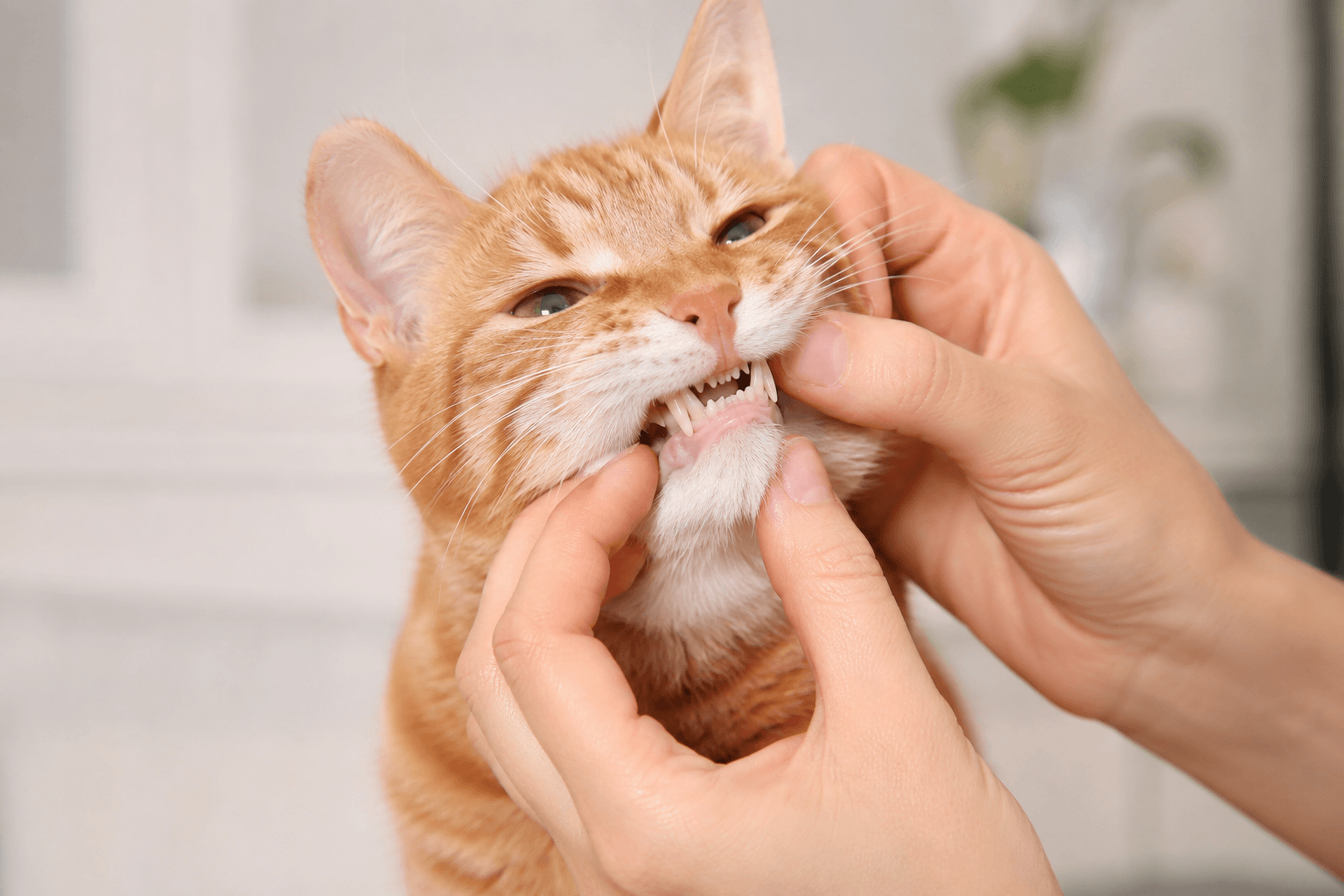
Before diving into how to brush a cat’s teeth, it helps to recognize the warning signs of poor oral health so you know how urgent the situation is. Cats are experts at hiding discomfort, so these signs are sometimes subtle and easy to miss unless you are paying close attention.
- Persistent bad breath that does not go away
- Red, swollen, or bleeding gums
- Yellow or brown tartar buildup along the gum line
- Drooling more than usual
- Difficulty eating or chewing only on one side of the mouth
- Pawing at the face or mouth
- Loose or missing teeth
- Noticeable weight loss due to reduced appetite
If you notice several of these signs together, it is best to schedule a veterinary checkup before starting or continuing a home brushing routine, since active infections or broken teeth may need professional treatment first. Once your cat is cleared by a vet, you can safely go back to learning how to brush a cat’s teeth as part of your regular pet care routine.
Tools You Need to Brush a Cat’s Teeth Properly
Having the right tools makes the entire process of brushing a cat’s teeth far easier and safer. Using human toothpaste or the wrong type of brush can actually harm your cat, so it is worth investing a little time in choosing the correct supplies.
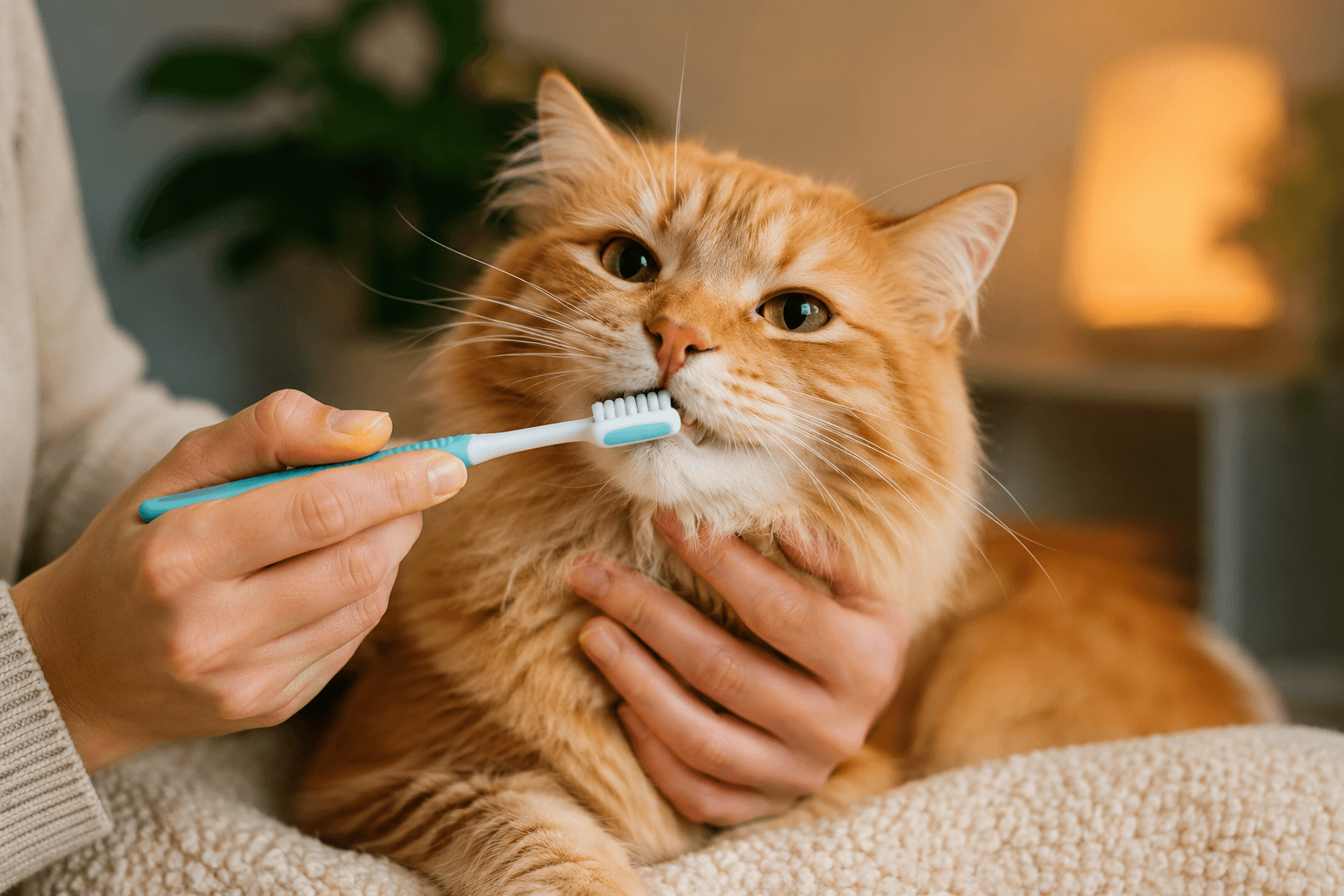
A soft-bristled cat toothbrush is designed specifically for the smaller size and shape of a feline mouth, and many come with a curved handle or finger-style design for better control. Cat-safe enzymatic toothpaste is another essential item, since it is formulated to be swallowed safely and often comes in flavors like poultry or fish that cats naturally enjoy. Never use fluoride toothpaste made for humans, as it contains ingredients that are toxic to cats. Dental wipes and finger brushes are good alternatives for cats that resist a traditional brush, especially during the early stages of training. Some owners also keep cat treats on hand to reward good behavior, which helps build positive associations with the entire teeth cleaning experience. Gathering these supplies ahead of time makes it much easier to brush a cat’s teeth without interruptions once your cat is ready to begin.
How to Brush a Cat’s Teeth Step by Step
This is the part most owners are searching for, and once you understand the process, you will see that learning how to brush a cat’s teeth is far less complicated than it sounds. Patience and consistency matter more than speed, especially in the beginning.
Step 1: Choose a Calm Time and Place to Brush a Cat’s Teeth
Pick a moment when your cat is relaxed, such as after a meal or playtime, rather than when they are hungry, anxious, or hyperactive. A quiet room without loud noises or other pets around helps reduce stress and keeps your cat focused on you instead of distractions.
Step 2: Let Your Cat Get Used to Touch Before You Brush a Cat’s Teeth
Before introducing any tools, spend a few days simply touching your cat’s face, lips, and mouth area gently with your fingers. Lift the lips slightly and touch the teeth and gums for a few seconds at a time, rewarding calm behavior with praise or a small treat so your cat begins to associate this touch with something positive. This groundwork makes every future attempt to brush a cat’s teeth much smoother.
Step 3: Introduce the Toothpaste First
Let your cat lick a small amount of cat-safe toothpaste from your finger before you ever bring out the brush. This step allows your cat to get familiar with the taste and texture, which makes the actual process of brushing a cat’s teeth feel far less intimidating once you start.
Step 4: Introduce the Toothbrush Gradually
Apply a small amount of toothpaste to the brush and let your cat sniff or lick it first. Gently touch the brush to a few teeth for just a couple of seconds, then stop and reward your cat, gradually increasing the time over several sessions rather than trying to do a full cleaning right away. Going slowly at this stage is one of the biggest factors in successfully learning how to brush a cat’s teeth without a fight.
Step 5: Brush in Small Circular Motions
Once your cat tolerates the brush, hold their head gently but firmly, lift the lip on one side, and brush the outer surfaces of the teeth using small circular motions at a slight angle toward the gum line. This is the core action of how to brush a cat’s teeth effectively, so take your time and stay gentle. Focus mainly on the outer surfaces, since the tongue naturally helps clean the inner surfaces of the teeth in most cats.
Step 6: Work Through the Whole Mouth Slowly
Move systematically from the back molars to the front teeth on one side, then repeat on the other side, keeping each session short, especially in the beginning. Two to three minutes total is enough for most cats, and it is far better to do a shorter, calmer session than to force a longer one that causes stress. Remember that the goal of learning how to brush a cat’s teeth is long-term consistency, not a single perfect session.
Step 7: End Every Brush a Cat’s Teeth Session on a Positive Note
Always finish the brushing session with praise, a gentle petting session, or a favorite treat so your cat associates teeth brushing with a positive outcome. This final step is what makes cats willing to cooperate again the next time, turning the routine to brush a cat’s teeth into a normal part of daily life rather than a stressful task.
Tips to Make It Easier to Brush a Cat’s Teeth Over Time
Building a long-term habit around brushing a cat’s teeth takes a bit of strategy, and a few practical tips can make a noticeable difference in how smoothly the process goes.
Try brushing your cat’s teeth at the same time each day so it becomes part of a predictable routine, since cats generally respond well to consistency. Wrapping your cat gently in a towel, often called the “purrito method,” can help control movement without causing distress during early training sessions. Keeping sessions short, even just thirty seconds at first, prevents your cat from associating brushing with something exhausting or unpleasant. If your cat becomes highly stressed, it is perfectly fine to pause and try again the next day rather than pushing through and creating a negative memory. Some owners find it helpful to brush a cat’s teeth while their cat is sitting in their lap during a calm, sleepy moment, since this reduces resistance significantly compared to trying it when the cat is alert and active.
Alternatives and Additions to Brushing a Cat’s Teeth
While learning how to brush a cat’s teeth remains the gold standard for feline oral hygiene, not every cat will tolerate it, especially older cats or those with past negative experiences. Dental treats formulated to reduce plaque can offer some benefit, though they should never fully replace brushing. Water additives designed for oral health can be mixed into your cat’s drinking water to help reduce bacteria over time. Dental-specific cat food with a textured kibble shape can provide mild abrasive cleaning as your cat chews. Professional veterinary cleanings under anesthesia remain the most thorough method for removing tartar below the gum line, and most veterinarians recommend these on a schedule based on your cat’s individual dental health, often once a year for cats with any history of dental issues.
Final Thoughts
Understanding how to brush a cat’s teeth and committing to a consistent routine is one of the simplest ways to protect your cat from painful dental disease and expensive veterinary bills down the road. By choosing the right tools, introducing the process gradually, following a calm step-by-step method, and staying consistent, most cats can learn to accept, and sometimes even enjoy, regular teeth brushing. Combine this habit with professional checkups and a dental-friendly diet, and you will be giving your cat one of the most valuable gifts for a long, healthy, and comfortable life.
Frequently Asked Questions About Brushing a Cat’s Teeth
How often should I brush a cat’s teeth?
Ideally, brushing a cat’s teeth three to four times per week provides meaningful protection against plaque and tartar buildup, though daily brushing offers the best results if your cat tolerates it well.
At what age should I start learning how to brush a cat’s teeth?
It is best to start as early as kittenhood, since young cats adapt to new routines more easily, but adult and senior cats can also be trained gradually with patience.
Can I use human toothpaste on my cat?
No, human toothpaste often contains fluoride and foaming agents that are toxic to cats if swallowed, so only cat-specific enzymatic toothpaste should ever be used.
What if my cat refuses to let me brush a cat’s teeth?
Go back a step in the training process, use shorter sessions, rely more heavily on positive reinforcement, and consider dental treats or wipes as a temporary bridge while you continue gradual training.
How do I know if my cat has dental disease?
Bad breath, red or bleeding gums, visible tartar, drooling, and reluctance to eat hard food are common signs that indicate a veterinary dental checkup is needed.