
If you own one of these elegant, vocal, and intelligent felines, Siamese cat grooming is one of the most important parts of keeping your pet healthy, comfortable, and looking its best. Unlike long-haired breeds, Siamese cats have a short, fine coat that seems low maintenance at first glance, but proper Siamese cat grooming still requires the right technique, tools, and routine to prevent shedding, skin issues, and hairballs. In this guide, you’ll learn exactly how to groom a Siamese cat step by step, based on veterinary best practices and real-world experience, so your cat stays healthy from the inside out.
Whether you’re a first-time Siamese cat owner or someone looking to upgrade your grooming routine, this article covers everything: brushing techniques, bathing tips, nail trimming, ear and eye cleaning, dental care, and how to spot early signs of skin or coat problems. We’ll also answer the most common questions people search for online, so you get a complete, trustworthy resource in one place.
Why Siamese Cat Grooming Matters More Than You Think
Many new owners assume that because Siamese cats have short hair, they don’t need much grooming. This is a common misconception. Siamese cats groom themselves constantly, which means they swallow a lot of loose fur, a major cause of hairballs and digestive issues. Regular grooming for Siamese cats reduces shedding, prevents matting around sensitive areas, strengthens the bond between you and your cat, and gives you a chance to spot health problems early, such as lumps, fleas, or skin irritation.
Grooming also supports your cat’s emotional wellbeing. Siamese cats are known for being social and affectionate, and a calm grooming session can become a bonding ritual rather than a stressful chore.
Understanding the Siamese Coat Type
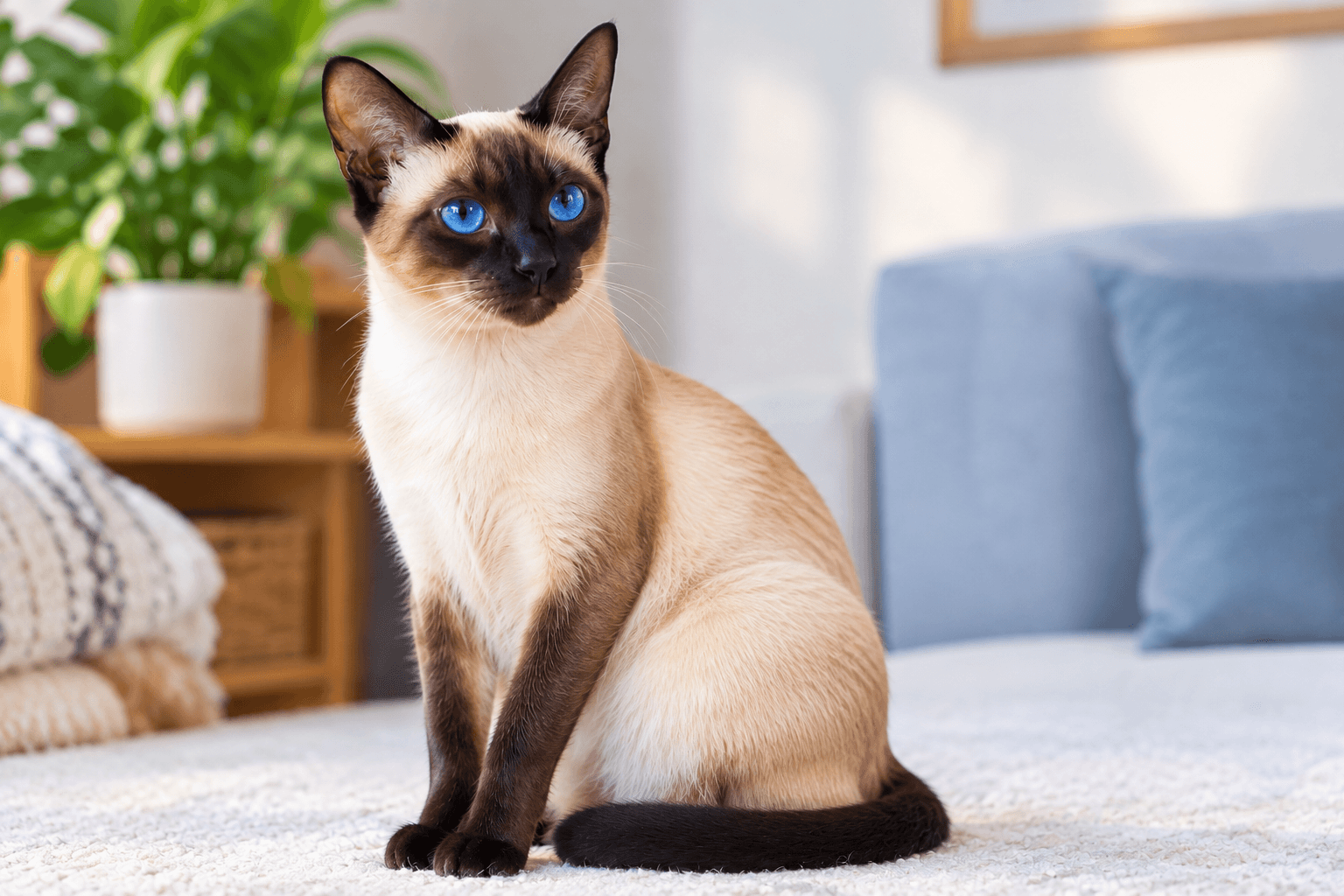
Before diving into techniques, it helps to understand what makes the Siamese coat unique. Siamese cats have a single-layer coat, meaning they lack the thick undercoat found in breeds like Maine Coons or Persians. This single coat lies close to the body and feels silky to the touch. Because there’s no undercoat, Siamese cats shed less than double-coated breeds, but they still shed year-round, with heavier shedding during seasonal changes in spring and fall.
This coat type means grooming tools designed for thick or long fur (like heavy-duty de-shedding rakes) aren’t ideal. Instead, gentler tools work best, which we’ll cover in the next section.
Essential Tools for Siamese Cat Grooming
Having the right grooming kit makes the entire process faster, safer, and more comfortable for your cat. Here’s what you need:
- Rubber grooming brush or grooming mitt – Removes loose hair without irritating the skin.
- Fine-tooth comb – Useful for checking for fleas and smoothing the coat.
- Cat-safe nail clippers – Trimmed nails prevent scratching and snagging.
- Cat-specific shampoo – Never use human shampoo, as it disrupts your cat’s skin pH.
- Soft washcloth – For cleaning the face, eyes, and ears gently.
- Cotton balls or pads – For ear cleaning (never cotton swabs deep in the ear canal).
- Pet toothbrush and enzymatic toothpaste – For dental hygiene.
- Grooming wipes – Handy for quick touch-ups between full grooming sessions.
Investing in quality tools is a foundational step in any effective Siamese cat grooming routine, and it reduces stress for both you and your cat during each session.
Step-by-Step Siamese Cat Grooming Routine
Follow this structured routine to keep your Siamese cat’s coat and skin in top condition.
Step 1: Brushing the Coat
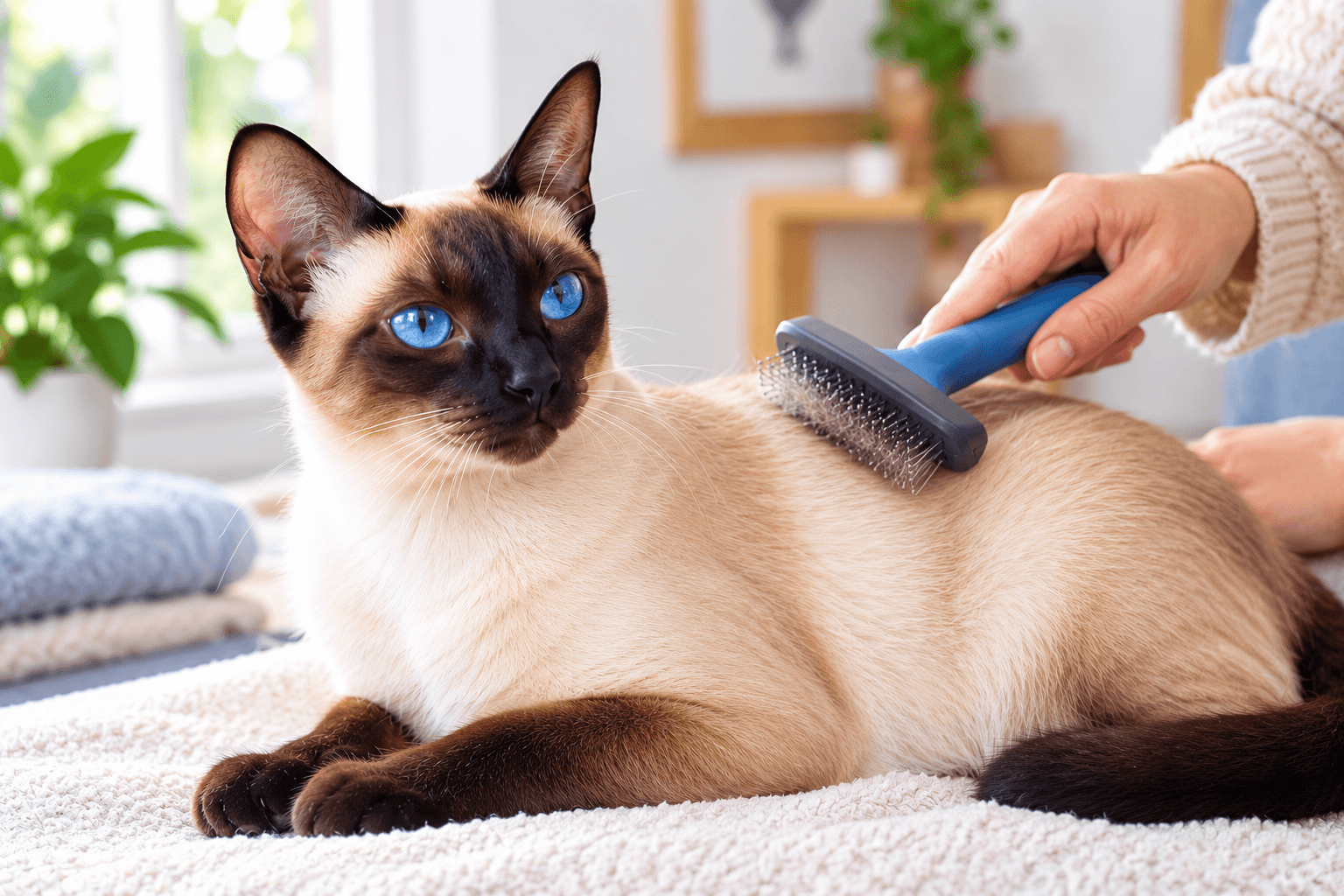
Brush your Siamese cat once or twice a week using a rubber brush or grooming mitt. Always brush in the direction of hair growth, using gentle, short strokes. This removes loose fur before your cat ingests it, distributes natural skin oils for a healthy shine, and helps you check for skin abnormalities. During shedding season (spring and fall), increase brushing to three to four times a week.
Step 2: Bathing (Only When Necessary)
Siamese cats are excellent self-groomers and typically don’t need frequent baths. However, bathing every 4 to 6 weeks, or when your cat gets visibly dirty, greasy, or exposed to something toxic, helps maintain a clean, healthy coat. Use lukewarm water and a cat-formulated shampoo, avoid getting water in the ears and eyes, and rinse thoroughly to prevent skin irritation from leftover residue. Dry your cat immediately with a soft towel, since Siamese cats are prone to feeling cold due to their lean body type and thin coat.
Step 3: Nail Trimming
Trim your Siamese cat’s nails every 2 to 3 weeks. Long nails can snag on fabric, cause pain, or lead to ingrown claws. Use cat-specific clippers, trim only the sharp tip, and avoid the pink “quick” area, which contains nerves and blood vessels.
Step 4: Ear Cleaning
Check your cat’s ears weekly for wax buildup, redness, or odor, which may indicate an infection or ear mites. Clean gently with a vet-approved ear cleaner and a soft cotton pad. Never insert anything deep into the ear canal.
Step 5: Eye Care
Siamese cats can develop minor discharge around the eyes, especially due to their facial structure. Wipe gently with a damp, soft cloth daily or every other day to prevent tear staining and irritation.
Step 6: Dental Hygiene
Dental disease is one of the most overlooked health issues in cats. Brush your Siamese cat’s teeth two to three times a week using a pet-safe enzymatic toothpaste. This habit prevents plaque buildup, bad breath, and costly dental procedures later in life.
How Often Should You Groom a Siamese Cat?
| Grooming Task | Recommended Frequency |
|---|---|
| Brushing | 1–2 times weekly (more during shedding season) |
| Bathing | Every 4–6 weeks |
| Nail trimming | Every 2–3 weeks |
| Ear cleaning | Weekly check, clean as needed |
| Eye wiping | Daily or every other day |
| Teeth brushing | 2–3 times weekly |
Sticking to this schedule keeps your Siamese cat’s coat, skin, and overall hygiene consistently healthy, without overwhelming your cat with excessive handling.
Common Siamese Cat Skin and Coat Problems
Even with a proper grooming routine, Siamese cats can experience a few breed-specific concerns:
- Dry, flaky skin – Often linked to diet or low humidity; a fish-oil supplement can help.
- Feline acne – Appears as small black spots on the chin, usually caused by plastic food bowls; switch to ceramic or stainless steel.
- Excessive grooming or fur pulling – Can signal stress, allergies, or parasites and should be checked by a veterinarian.
- Seasonal color changes – Siamese cats’ points (face, ears, paws, tail) darken with age or in colder climates; this is normal pigmentation, not a skin issue.
If you notice persistent redness, bald patches, or unusual odor, consult a veterinarian rather than attempting home treatment, since these could indicate allergies, fungal infections, or parasites.
Diet’s Role in Coat Health
Grooming isn’t only about brushing and bathing, nutrition plays a direct role in coat quality. A diet rich in high-quality protein, omega-3 and omega-6 fatty acids, and proper hydration supports a shiny, healthy coat from within. Many veterinarians recommend cat food formulated with fish oil or flaxseed to reduce dryness and shedding. If you notice a dull or brittle coat despite regular grooming, it’s worth reviewing your cat’s diet with your vet.
Tips to Make Grooming Stress-Free for Your Siamese Cat
Siamese cats are intelligent and sensitive, and a bad grooming experience can make future sessions difficult. Keep these tips in mind:
- Start grooming routines when your cat is a kitten so it becomes a normal part of life.
- Keep sessions short (5–10 minutes) and calm.
- Use treats and gentle praise to create positive associations.
- Groom during a relaxed time, such as after playtime or a meal.
- Never force a struggling cat, pause and try again later.
Patience is key. A confident, gentle approach builds trust and makes every future grooming session easier.
Final Thoughts on Siamese Cat Grooming
A consistent Siamese cat grooming routine isn’t just about appearance, it’s a core part of responsible pet ownership that supports your cat’s physical health, comfort, and emotional wellbeing. By brushing regularly, bathing only when needed, trimming nails, cleaning ears and eyes, and maintaining dental hygiene, you’ll help your Siamese cat live a healthier, more comfortable life. Pair this routine with a quality diet and gentle handling, and grooming will become a positive bonding experience rather than a chore for both you and your cat.
If you stay consistent with the schedule and tips outlined in this guide, your Siamese cat’s coat will stay soft, shiny, and healthy for years to come.
Frequently Asked Questions About Siamese Cat Grooming
Do Siamese cats need professional grooming?
Most Siamese cats don’t require professional grooming due to their short, single-layer coat. However, a professional groomer can help with nail trims, deep cleaning, or if your cat has mobility issues that make self-grooming or at-home grooming difficult.
Why does my Siamese cat groom so much?
Siamese cats are naturally meticulous groomers. Occasional excessive grooming is normal, but if it becomes obsessive or leads to bald patches, it may indicate stress, allergies, or a medical issue that needs veterinary attention.
Do Siamese cats shed a lot?
Siamese cats shed less than double-coated breeds because they lack a thick undercoat. Still, they shed year-round with seasonal peaks, so regular brushing helps manage loose fur.
Can I use a de-shedding tool on a Siamese cat?
Heavy deshedding tools designed for thick coats aren’t necessary and can irritate a Siamese cat’s sensitive skin. A rubber brush or grooming mitt is gentler and more effective for this coat type.
How do I stop my Siamese cat’s tear stains?
Wipe the area gently with a damp cloth daily, keep the face area dry, and consult your vet if staining is severe, as it could relate to allergies or a blocked tear duct.